
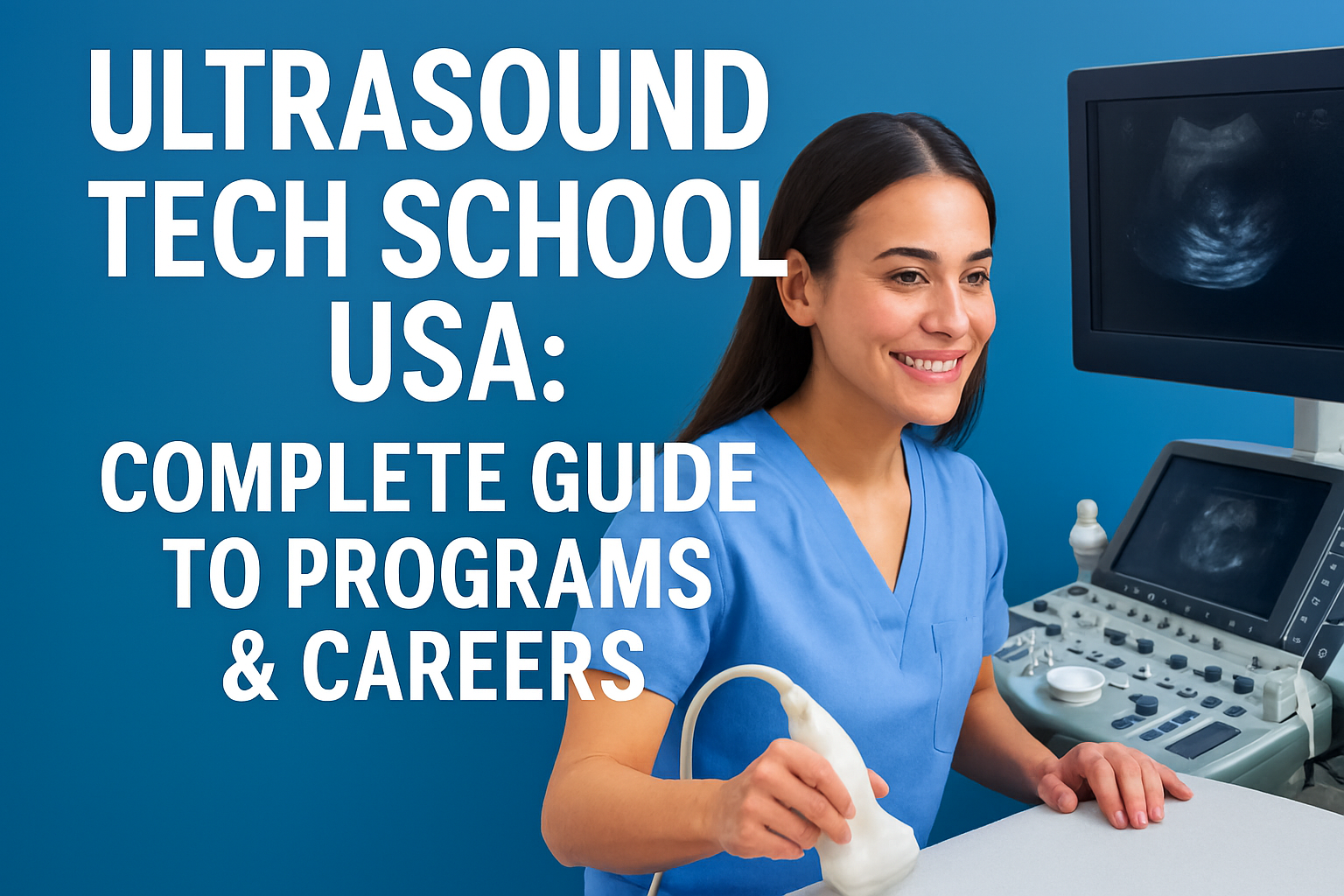
Ultrasound tech school trains you to perform diagnostic sonography. You learn scan techniques, anatomy, patient care, and image interpretation. Programs prepare you to sit for or ARRT exams. You gain hands-on lab time and clinical hours before graduation.
What program types can you choose?
- Certificate programs: 9–18 months; best for students who already hold a healthcare degree.
- Associate degree (AAS): 18–24 months; the most common entry path.
- Bachelor of Science: 3–4 years; deeper clinical theory and leadership prep.
- Accelerated or bridge tracks: shorter timelines for LPNs, RNs, or allied-health grads.
Which path matches your time frame and goals?
What prerequisites must you meet?
Common prerequisites include Anatomy and Physiology, General Biology, Medical Terminology, basic Physics, and Algebra. Helpful courses include Chemistry, a physiology lab, patient care, and basic statistics. Admissions may require a minimum GPA, background check, immunizations, CPR certification, and shadowing hours. Can you meet these academic and clinical entry requirements?
How does program accreditation affect you?
Choose CAAHEP-accredited programs to ensure accepted clinical hours and exam eligibility. Graduation from an accredited program often determines your eligibility for national certification exams. Employers prefer graduates from accredited programs when they hire and promote staff. Do you want a program that guarantees certification eligibility?
Which certifications will you pursue?
ARDMS credentials such as RDMS and RDCS stand as common national certifications. ARRT sonography certification provides another recognized pathway. You must complete required clinical hours and pass national exams to receive credentials. Which credential aligns with your chosen specialty?
How much will school cost and how can you pay?
Certificate cost: roughly $3,000–$15,000. Associate cost: roughly $8,000–$30,000. Bachelor cost: roughly $20,000–$60,000 depending on public or private status. You can apply for federal aid through FAFSA, institutional scholarships, program grants, or employer tuition support. Have you mapped your financing plan?
What career paths and specialties exist?
Common specialties include Abdominal, OB/GYN, Vascular, Cardiac, Neurosonography, and Pediatric sonography. Career ladder: staff sonographer, lead sonographer, clinical educator, department manager, vendor application specialist. You can pursue focused certifications or graduate studies to move into leadership or advanced clinical roles. Which specialty excites you most?
How strong is job demand and salary potential?
U.S. job growth for diagnostic medical sonographers projects near 10% from 2022 to 2032. Salary varies by specialty, location, and employer type. Vascular and cardiac specialists command higher pay. Hospitals, outpatient centers, cardiology clinics, and telemedicine services hire regularly. Do you want stability or the highest salary potential?
How do hybrid and clinical delivery models work?
Programs offer online didactic courses paired with on-campus lab sessions and local clinical placements. Programs list clinical hour minimums and partner site networks to validate training quality. You must plan travel and schedule logistics for clinical rotations. Can you commit to in-person clinical hours?
What steps should you take next?
- Define your career goal and preferred specialty.
- Complete required prerequisite courses and check GPA limits.
- Filter schools for CAAHEP accreditation, clinical partners, and certification pass rates.
- Assemble transcripts, immunizations, CPR proof, background check documents, and observation logs.
- File FAFSA and apply for scholarships or employer support.
- Apply to programs and arrange for clinical logistics.
Which step will you take first?
Final recommendation
Prioritize a CAAHEP-accredited program with transparent certification pass rates and strong clinical affiliations. Choose the fastest credible path that meets clinical and accreditation standards. Match your specialty choice to regional demand and salary upside to maximize return on investment. Ready to turn this plan into an optimized SEO article for the keyword “ultrasound tech school usa”?
FAQs
What is an ultrasound tech school?
An ultrasound tech school trains you to operate ultrasound equipment and produce diagnostic images. Programs combine classroom lessons, hands-on labs, and clinical internships. Graduates prepare to sit for national certification exams.
What program types exist and how long do they take?
Certificate programs take about 9–18 months. Associate degrees take about 18–24 months. Bachelor programs take about 3–4 years. Which timeline fits your schedule?
What prerequisites do programs usually require?
Most programs ask for Anatomy and Physiology, General Biology, Medical Terminology, basic Physics, and Algebra. Some programs ask for CPR certification, immunizations, and background checks. Do you meet those entry requirements?
How important is program accreditation?
Accreditation from CAAHEP matters for clinical hour recognition and exam eligibility. Employers prefer graduates from accredited programs. Choose accredited programs to protect your certification pathway.
What certifications will I need?
ARDMS credentials such as RDMS and RDCS serve as primary options. ARRT sonography certification offers an alternative route. You must meet clinical hour requirements before you sit for exams.
Can I study online for ultrasound tech school?
You can study theory online. You must complete on-campus labs and supervised clinical rotations in person. Plan logistics for local clinical placements.
How much does ultrasound tech school cost?
Certificate programs range roughly $3,000–$15,000. Associate programs range roughly $8,000–$30,000. Bachelor programs range roughly $20,000–$60,000. Have you calculated tuition and fees for local options?
What financial aid options exist?
You can apply for federal aid through FAFSA. You can seek institutional scholarships and program-specific grants. You can explore employer tuition assistance if you work in healthcare.
What specialties can I choose?
You can specialize in Abdominal, OB/GYN, Vascular, Cardiac, Neurosonography, or Pediatrics. Specialty certification can raise your pay and job options. Which specialty appeals to you most?
What job outlook and salary should I expect?
The field shows strong demand and steady hiring across settings. Specialists such as vascular and cardiac sonographers typically earn higher wages. Regional demand affects salary and hiring volume.
How do I choose the best school for me?
Filter programs for CAAHEP accreditation, clinical placement networks, and certification pass rates. Check lab equipment, faculty clinical experience, and program outcome data. Ask program staff about clinical sites and graduate success metrics.
What steps should I take to apply?
- Decide your specialty and timeline.
- Finish prerequisite courses and secure transcripts.
- Collect immunization records, CPR proof, and observation hours.
- Apply to accredited programs and prepare for clinical logistics. Which application task will you complete first?
Homedwellish — Smart ideas for better living at home.