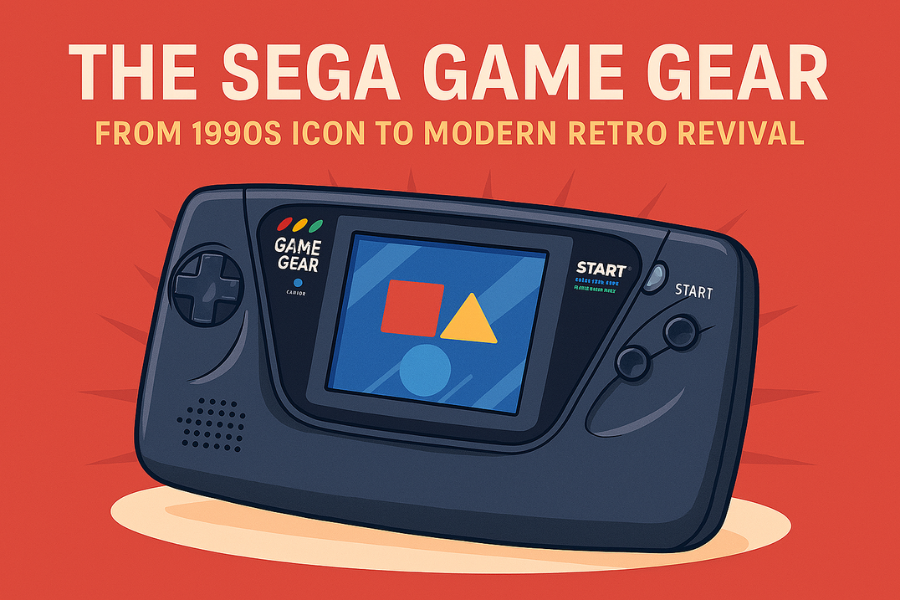
The Sega Game Gear remains one of the most fascinating handheld consoles in gaming history. Released in 1990 (Japan) and 1991 (North America), it was Sega’s bold answer to Nintendo’s Game Boy. With its full-color, backlit screen and landscape design, the Game Gear promised a futuristic portable gaming experience. Yet, despite its innovations, it struggled commercially and was discontinued in 1997. Today, however, the Game Gear enjoys a second life through retro collecting, restoration, and emulation devices that make its unique library more accessible than ever.
Key Features That Defined the Game Gear
- Full-Color Backlit Screen:
- 3.2-inch TFT LCD
- 160×240 resolution
- Displayed 32 simultaneous colors from a palette of 4,096
- A huge leap over the Game Boy’s monochrome display
- Landscape Orientation:
- Ergonomic horizontal design, more comfortable for long play sessions
- Master System Compatibility:
- With the Master Gear Converter, players could enjoy Sega Master System cartridges on the go
- Accessories:
- TV Tuner: Turned the handheld into a portable television
- AC Adapter: Essential due to high battery drain
- Specs at a Glance:
Why the Game Gear Struggled
Despite its technical edge, the Game Gear couldn’t dethrone the Game Boy. Key reasons included:
- Battery Drain: Six AA batteries lasted only 3–5 hours, compared to the Game Boy’s 10–15 hours.
- Bulky Design: Larger and heavier than its rival, making it less portable.
- Screen Limitations: While colorful, the display suffered from motion blur and poor viewing angles.
- Game Library: Respectable, but far smaller than Nintendo’s massive Game Boy catalog.
Notable Games That Defined the Library
- Columns – Sega’s puzzle answer to Tetris, often bundled with the console
- Sonic the Hedgehog: Triple Trouble – Exclusive Sonic adventure for Game Gear
- Streets of Rage 2 – A solid handheld port of the iconic beat ’em up
- Shining Force: The Sword of Hajya – Tactical RPG brilliance on the go
- Gunstar Heroes – Action-packed run-and-gun gameplay
- Castle of Illusion Starring Mickey Mouse – A polished platformer with Disney charm
- Ristar – A colorful, creative platformer that showcased the hardware
Nostalgia and Collecting
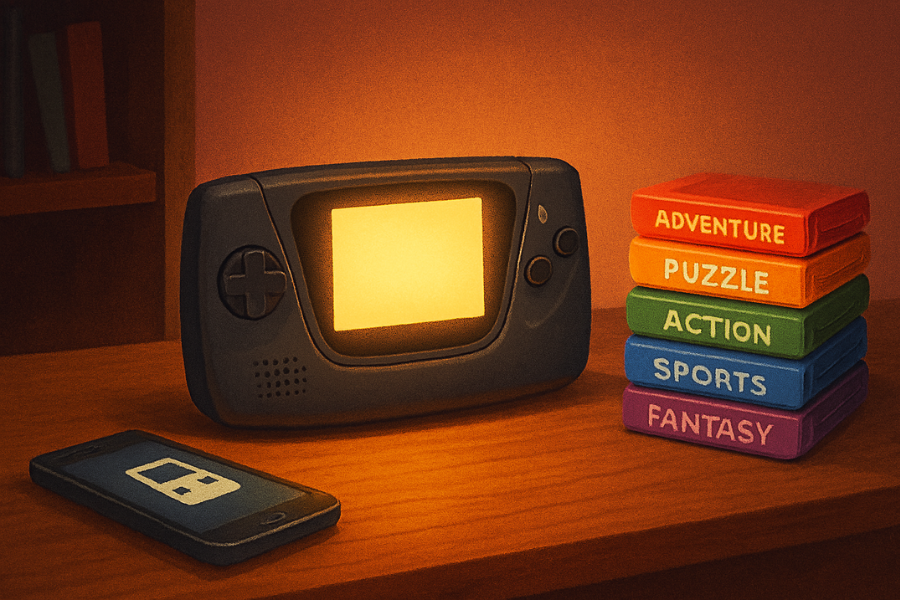
For many who grew up in the 1990s, the Game Gear was their first personal console. However, time hasn’t been kind to the hardware:
- Screen Failures: Many units today require capacitor replacements (“recapping”).
- Collector’s Challenge: Finding a working unit in the wild is rare.
- Emotional Value: For retro enthusiasts, restoring or emulating the Game Gear is a way to reconnect with childhood memories.
Modern Ways to Experience the Game Gear
Thanks to retro handhelds and emulation, the Game Gear’s library is more alive than ever. Here are the standout options:
- GKD Bubble – Designed with Game Gear fans in mind; a go-to emulation device.
- Anbernic RG Cube / CubeXX – Square-screen handhelds that replicate the Game Gear’s 10:9 aspect ratio beautifully.
- BatleXP G350 – Budget-friendly ($35 or less), yet surprisingly high quality.
- Anbernic RG Arc D/S – A Sega-inspired handheld with a 6-button layout, perfect for purists.
- Anbernic RG34XX – A versatile device that handles Game Gear emulation effortlessly.
Modern Revivals
- Game Gear Micro (2020): Released in Japan for Sega’s 60th anniversary, available in four colors with different built-in games.
- Analogue Pocket & Other Emulators: Modern retro handhelds with advanced screens that make Game Gear titles look better than ever.
Final Thoughts
The Sega Game Gear was both ahead of its time and a victim of its ambition. Its color screen and accessories made it a marvel of the early ’90s, but its short battery life and bulky design limited its mainstream success. Today, however, through restoration, collecting, and emulation, the Game Gear has found new life. For retro enthusiasts, it’s not just a console—it’s a time capsule of Sega’s bold vision for handheld gaming.
FAQs
1. Why did the Sega Game Gear fail?
The Game Gear failed primarily due to its poor battery life, bulky design, and a smaller game library compared to Nintendo’s Game Boy. While technically superior, it couldn’t overcome these practical limitations.
2. How much did the Sega Game Gear cost at launch?
The Game Gear launched in Japan in October 1990 and in North America in April 1991 with a retail price of $149.99 USD.
3. How long did the Sega Game Gear’s batteries last?
On six AA batteries, the Game Gear typically lasted 3–5 hours, far less than the Game Boy’s 10–15 hours.
4. What were the best Sega Game Gear games?
Some of the most popular titles include:
- Sonic the Hedgehog: Triple Trouble
- Columns
- Streets of Rage 2
- Shining Force: The Sword of Hajya
- Castle of Illusion Starring Mickey Mouse
- Ristar
5. Could the Sega Game Gear play Sega Master System games?
Yes. With the Master Gear Converter accessory, the Game Gear could play Sega Master System cartridges, expanding its library significantly.
6. What modern options exist for playing Game Gear games?
- Original hardware restoration (recapping, screen mods)
- Game Gear Micro (2020) mini console
- Retro handhelds like the GKD Bubble, Anbernic RG Cube, and BatleXP G350
- Analogue Pocket and other FPGA-based emulators
7. How many units of the Sega Game Gear were sold?
The Game Gear sold around 10.6 million units worldwide, compared to the Game Boy’s 118 million.
8. What was the most sold Sega Game Gear game?
Sonic the Hedgehog was the best-selling Game Gear title, bundled with many systems and widely popular.
“Home Dwellish — From décor to smart upgrades, we dwell on what matters.”