
Technology shapes every part of your life. Security risks, global regulations, and rapid innovation create constant pressure. A Technology Alert List gives you awareness and control. Governments use it to protect sensitive research. Businesses use it to track threats and industry shifts. Individuals use it to stay safe online and prepare for the future.
You face constant change in cybersecurity, compliance, and emerging technologies. Alerts help you act before risks escalate. They highlight opportunities in AI, blockchain, and sustainable tech. By using the Technology Alert List, you gain a tool that strengthens security, drives innovation, and builds future readiness.
Statista reports that global cybersecurity spending will exceed $300 billion by 2026. That scale shows how vital structured alerts have become. Are you ready to use them to secure your future?
What is the Technology Alert List?
The Technology Alert List (TAL) carries two major meanings.
In government and security, the TAL is a U.S. government tool. It highlights sensitive technologies such as advanced computing, biotechnology, aerospace, and materials science. Visa officers use it to screen applicants in fields with dual-use potential—civilian and military.
The TAL has two divisions:
- Critical Fields List – research areas with national security impact.
- State Sponsors of Terrorism List – countries whose nationals face extra scrutiny.
Why does it matter? It prevents illegal transfer of sensitive technologies, protects against proliferation of weapons of mass destruction, and preserves U.S. leadership in critical fields.
For individuals, the impact is direct. Visa applications may face Visa Mantis reviews, administrative delays, and deeper background checks.
In business and consumer contexts, a technology alert list means real-time notifications. These alerts cover cybersecurity threats, regulatory changes, and emerging technologies. They help you stay informed, reduce risks, and capture opportunities.
Why are Technology Alerts Important Today?
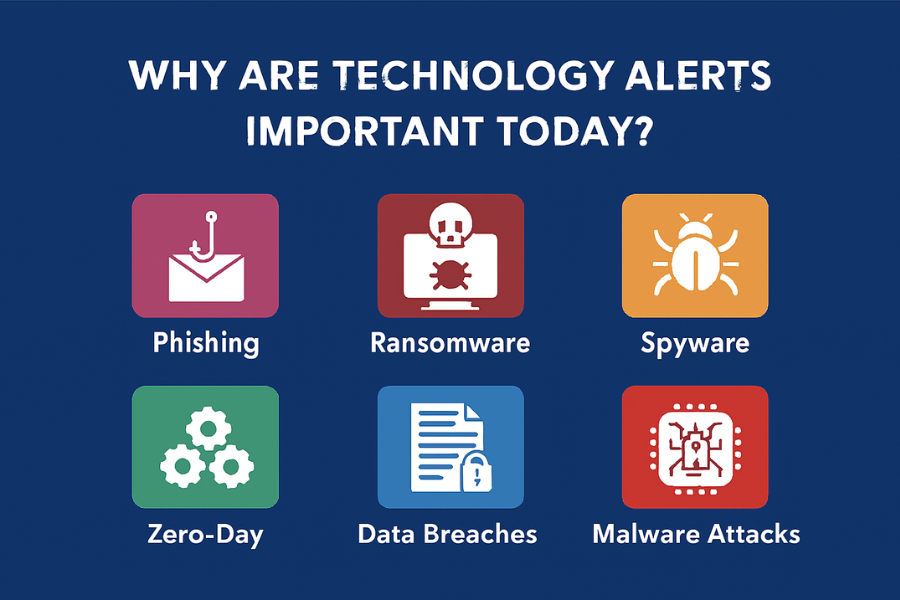
- Cybersecurity Threats You face phishing, ransomware, spyware, and malware daily. Zero-day vulnerabilities and data breaches add to the risk. Agencies like CISA and NIST issue alerts that provide early warnings. In 2023, global ransomware damages reached $30 billion (Cybersecurity Ventures).
- Hardware and Software Updates Operating systems release patches across Windows, macOS, and Linux. IoT devices and routers require firmware fixes. End-of-life announcements for outdated software create urgency for upgrades.
- Regulatory and Compliance Changes Governments update GDPR, CCPA, and global privacy laws. Healthcare, finance, and data protection sectors face new compliance requirements. Gartner reports that 70% of organizations will increase compliance spending by 2026.
- Emerging Technologies AI, blockchain, and quantum computing reshape industries. 5G enhances connectivity and security. MarketsandMarkets projects AI adoption to grow at a CAGR of 37% through 2030.
- Cloud and Mobile Security AWS, Azure, and Google Cloud issue alerts on misconfigurations. Mobile OS vulnerabilities and malicious apps threaten users.
- Online Scams and Social Media Risks Deepfakes, fake job scams, and fraudulent marketing target consumers. Alerts help you avoid identity theft and financial fraud.
What Value Does a Technology Alert List Bring to Businesses?
A Technology Alert List system gives you more than protection. It creates a strategic edge.
- Competitive Advantage – Spot industry shifts early.
- Informed Decision-Making – Use real-time alerts to guide investments.
- Risk Mitigation – Reduce exposure to cyberattacks and compliance failures.
- Innovation – Identify opportunities in AI, robotics, and green tech before rivals.
PwC reports that 79% of CEOs see cybersecurity as a top business risk. A TAL framework helps you act before threats escalate.
What Technologies Define the Alert List?
| Technology | Why It Matters | Example Applications |
| AI & Machine Learning | Drives automation and predictive analytics | Healthcare diagnostics, autonomous cars |
| 5G & Beyond | Enables ultra-fast, low-latency connectivity | Smart cities, IoT ecosystems |
| Quantum Computing | Unlocks new problem-solving power | Drug discovery, cryptography |
| Blockchain & DeFi | Secures decentralized transactions | Finance, supply chain, identity |
| AR & VR | Creates immersive experiences | Education, gaming, remote work |
| Robotics & Automation | Boosts efficiency and precision | Surgery, manufacturing, eldercare |
| Sustainable Tech | Supports climate resilience | Renewable energy, smart grids |
| Cybersecurity Advances | Defends against evolving threats | AI-driven detection, zero-trust models |
Statista projects global spending on cybersecurity to surpass $300 billion by 2026. That scale shows how critical TAL-driven insights will be.
How Can You Stay Updated on Technology Alerts?
- Subscribe to bulletins from CISA, NIST, and SANS Institute.
- Enable alerts from antivirus and endpoint protection tools.
- Follow tech news outlets like Wired, TechCrunch, and Ars Technica.
- Join communities on GitHub, Reddit, and Stack Overflow.
- Monitor regulatory sites such as FTC and ENISA.
- Adopt AI-driven threat intelligence for real-time monitoring.
Final Thoughts
The Technology Alert List acts as a lifeline for security, innovation, and competitiveness. You gain protection, foresight, and opportunity when you understand it. Students, business leaders, and tech enthusiasts all benefit from TAL awareness.
Are you ready to use TAL insights to secure your future and lead in innovation?
FAQs
What is the Technology Alert List?
The Technology Alert List (TAL) is a U.S. government tool. It identifies sensitive technologies such as AI, biotechnology, aerospace, and advanced materials. Visa officers use it to screen applicants in fields with dual-use potential. Businesses also use TAL-style alerts to track cybersecurity risks and industry changes.
Why does the TAL matter for students and researchers?
The TAL affects visa applications for students and researchers in critical fields. Applications may face Visa Mantis reviews and longer processing times. The U.S. government uses this process to prevent illegal transfer of sensitive knowledge.
How does the TAL impact businesses?
A TAL framework helps businesses detect cybersecurity threats, regulatory changes, and emerging technologies. It creates a competitive advantage by reducing risks and spotting opportunities early. PwC reports that 79% of CEOs see cybersecurity as a top business risk.
What technologies appear on the alert list?
The 2025 list highlights AI, 5G, quantum computing, blockchain, AR/VR, robotics, sustainable tech, and cybersecurity innovations. Each field drives major change in industries such as healthcare, finance, and manufacturing. Statista projects global cybersecurity spending to exceed $300 billion by 2026.
How can you stay updated on technology alerts?
You can subscribe to bulletins from CISA, NIST, and SANS Institute. You can also follow tech news outlets like Wired and TechCrunch. Security software alerts and AI-driven monitoring tools provide real-time updates.
What value does a Technology Alert List bring to individuals?
A TAL system helps you stay safe online, avoid scams, and prepare for future opportunities. Alerts highlight risks in phishing, ransomware, and data breaches. They also point to growth areas in AI, blockchain, and green technologies.
“Home Dwellish — Bringing you fresh ideas for better living spaces.”