
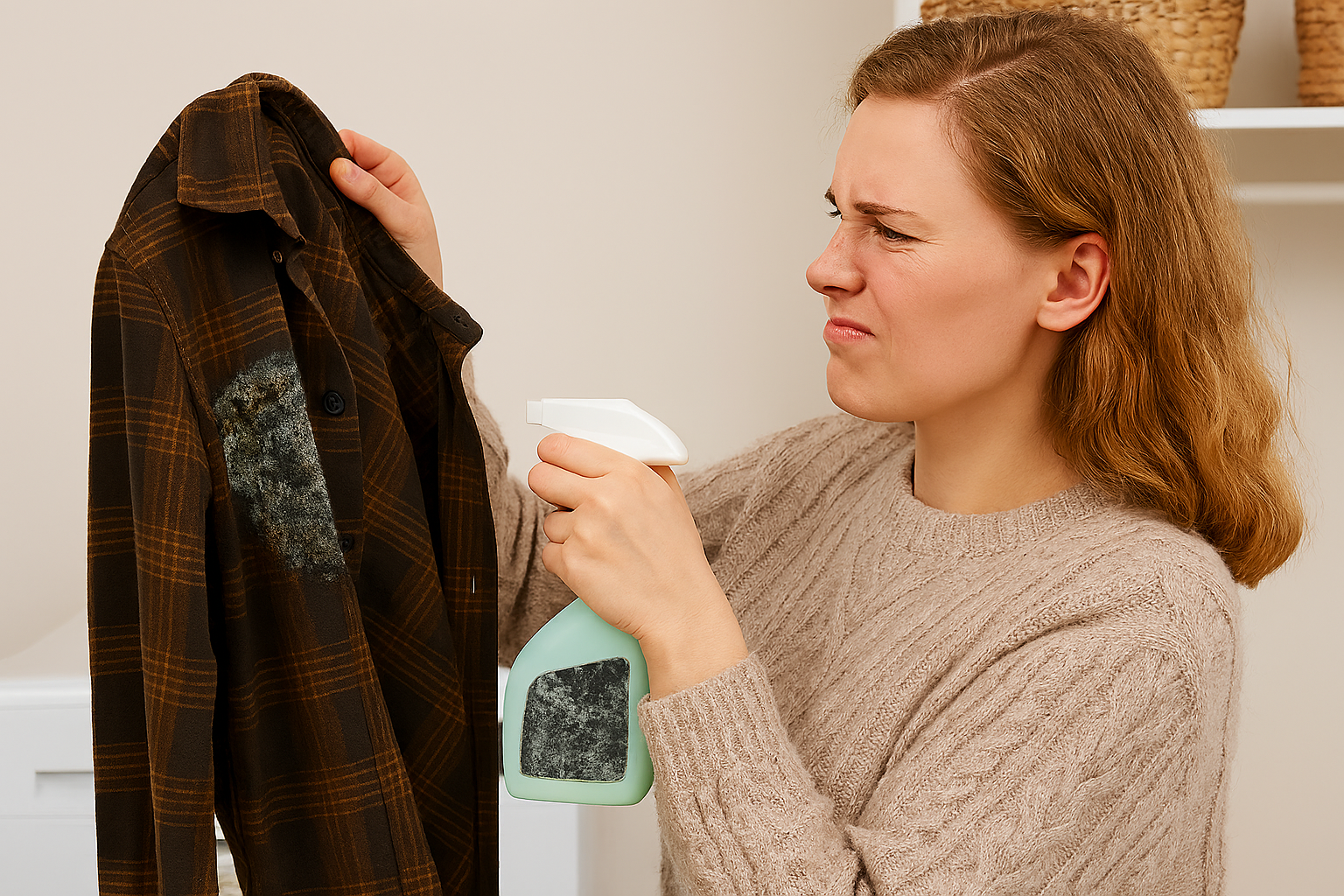
Mold on clothes is more than a cosmetic issue. It weakens fabric fibers, leaves permanent stains, and can trigger allergies or respiratory problems. Acting quickly with the right cleaning methods restores your garments and protects your health.
What Causes Mold on Clothes?
- Moisture and humidity: Damp closets, basements, or laundry left wet.
- Poor ventilation: Packed wardrobes with no airflow.
- Organic residue: Sweat, food stains, or body oils that feed spores.
According to the Institute for Environmental Research and Education, mold spores thrive in dark, humid environments and can colonize fabrics within 24–48 hours.
Why Is Mold Dangerous?
- Health risks: Mold exposure can worsen asthma, allergies, and lung conditions.
- Fabric damage: Spores break down fibers, leaving holes or stains.
- Odor: Musty smells linger even after washing if spores survive.
Supplies You Will Need
- White vinegar or borax
- Baking soda
- Mild detergent
- Soft-bristled brush
- Protective gloves and mask
- Sunlight or a well-ventilated drying area
Step-by-Step: How to Get Mold Out of Clothes
Step 1: Safety First
Wear gloves, mask, and goggles. Work outdoors to avoid spreading spores indoors.
Step 2: Brush Off Loose Mold
Take the garment outside and brush away visible mold with a soft brush.
Step 3: Pre-Treat With Vinegar or Baking Soda
- Vinegar method: Soak in 1 cup vinegar + 1 gallon water for 1 hour.
- Baking soda method: Sprinkle on stains, scrub gently, then rinse.
Step 4: Wash Thoroughly
- Use hot water if fabric allows.
- Add borax or vinegar to the wash cycle.
- For whites, bleach can be used (never mix bleach with ammonia).
Step 5: Dry Completely in Sunlight
Sunlight kills spores naturally. If unavailable, use a dryer on high heat.
Step 6: Smell and Stain Check
Repeat treatment if odors or stains remain. For delicate fabrics like silk or wool, seek professional cleaning.
Preventing Mold on Clothes
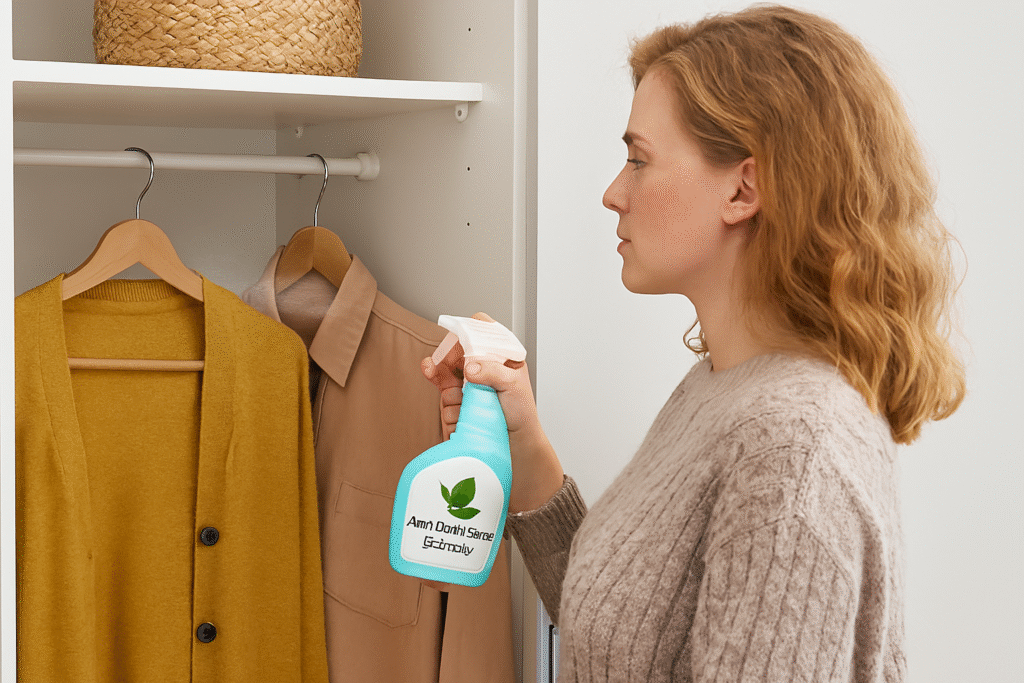
- Store clothes in a dry, ventilated area.
- Use silica gel packs or charcoal bags in closets.
- Wash and dry clothes promptly after sweating or exposure to moisture.
- Avoid overpacking wardrobes to allow airflow.
Should You Throw Out Moldy Clothes?
If mold has deeply penetrated fabric, caused permanent stains, or triggers allergic reactions, disposal may be the safest option.
Key Takeaways
- Mold thrives in damp, dark, and poorly ventilated spaces.
- Vinegar, baking soda, and borax are effective natural cleaners.
- Sunlight and heat are essential for killing spores.
- Prevention through proper storage is the best long-term solution.
FAQ
Can you put moldy clothes in the washing machine?
Yes, but pre-treat stains first. Washing alone may not kill spores.
How do you get black mold out of clothes?
Use vinegar or borax soaks, followed by hot water washing and sun-drying.
Is mold on clothes dangerous?
Yes. It can cause allergies, respiratory issues, and fabric damage.
How do you remove mold from clothes that can’t be washed?
Brush off spores, wipe with vinegar solution, and air-dry in sunlight. For delicate fabrics, seek professional cleaning
“Home Dwellish — Bringing you fresh ideas for better living spaces.”