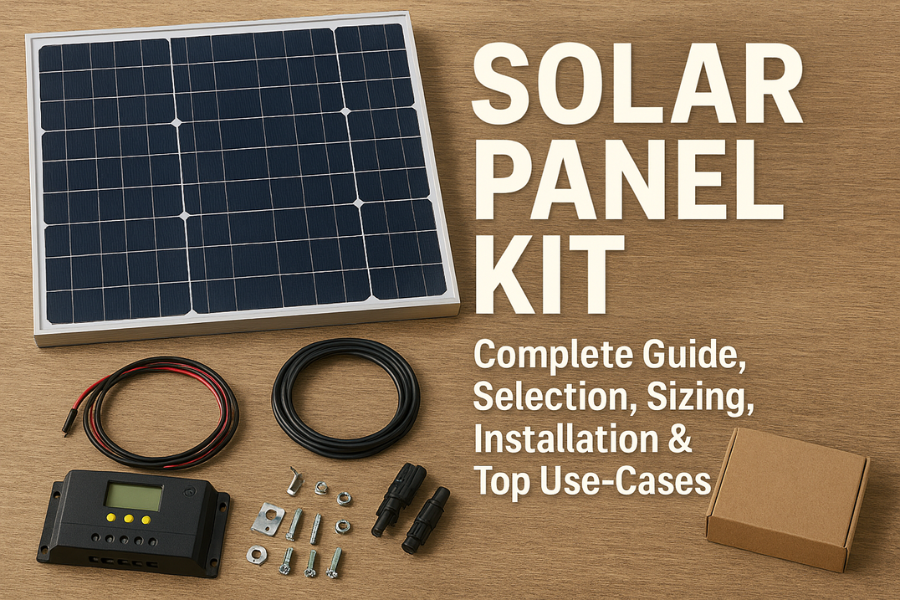
A solar panel kit is a packaged set of components that lets you generate, store, and use solar electricity with minimal design work. Kits range from tiny portable units for camping to full off-grid and hybrid home systems. This guide explains what a kit contains, the common kit types, how to size and choose one, installation and maintenance steps, realistic performance expectations, and a concise FAQ that solves common doubts so you can confidently pick the right solar panel kit.
What is a solar panel kit?
A solar panel kit bundles all parts you need to collect, store, and use solar electricity. A kit usually contains panels, a charge controller, a battery bank, an inverter, and wiring. You can use a kit for camping, a shed, an RV, or a full home backup system. Which use do you need right now?
What kit types exist and which one suits you best?
- Portable foldable kit — best for camping and day trips; 50 W to 400 W output; light and fast to set up.
- Mobile vehicle kit — made for vans, boats, and RVs; 200 W to 2000 W output; built for vibration and motion.
- Shed and cabin kit — suited for small buildings; 500 W to 6 kW output; rugged mounts and larger batteries.
- Home backup hybrid kit — for essential circuits and partial offset; 2 kW to 20+ kW output; expandable.
- Complete off-grid kit — for full independence; 2 kW to 50+ kW output; includes BMS and high-capacity inverters.
Which load do you want to cover today?
How do you size the right kit step by step?
- List appliances and their watt ratings. Add daily hours to get daily Wh.
- Multiply daily Wh by 1.2 to 1.4 for losses and cloudy days.
- Divide adjusted daily Wh by expected sun-hours to get required panel wattage.
- Decide days of autonomy. Compute battery kWh = daily Wh × days of autonomy ÷ usable DoD.
- Match inverter continuous rating to peak simultaneous load and surge needs.
- Add 10 to 25 percent margin for future growth and real conditions.
Would you like a worksheet template to fill these numbers?
What components matter most and how should you choose them?
- Panels — pick monocrystalline for high efficiency in limited roof area.
- Charge controller — choose MPPT for higher harvest and voltage flexibility.
- Battery — prefer LiFePO4 for longer cycles and deeper usable DoD.
- Inverter — select a pure sine wave unit for safe operation of electronics and motors.
- Wiring and protections — match cable size and fuse ratings to system current.
Do you already have a preferred brand for any component?
How do you install and keep the system safe?
- Follow local electrical codes and use an inverter with anti-islanding for grid-tied systems.
- Ground the array and use proper fusing between panels, controller, battery, and inverter.
- Place batteries in a ventilated and temperature-stable location that locks or secures.
- Mount panels at the correct tilt and orientation to maximize annual yield.
- Schedule visual checks yearly and tighten electrical connections as needed.
Who will perform the final grid connection at your site?
How do you maintain performance and extend component life?
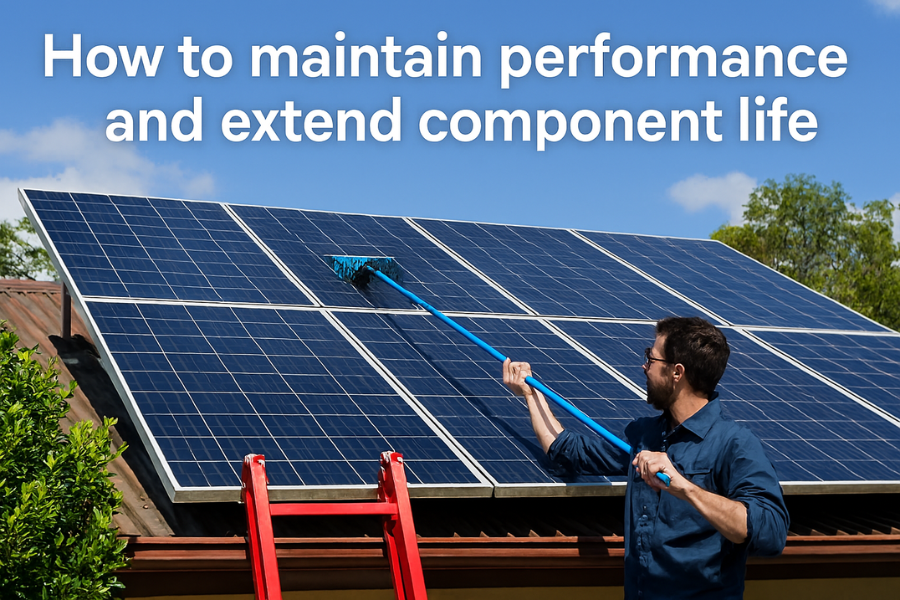
- Clean panels every three to six months in dusty areas.
- Monitor system output daily or weekly to spot sudden drops.
- Trim trees that cast shade on any panel.
- Cycle batteries per manufacturer guidance and maintain correct float voltage for lead-acid units.
- Plan inverter replacement every 8 to 15 years and expect gradual panel degradation after 20+ years.
Do you want a maintenance checklist for monthly and annual tasks?
What can common kit sizes run in real use?
- 100 W portable kit — charges phones, runs LED lights, and powers small electronics.
- 1 to 3 kW off-grid kit — supports a fridge, lights, and communications gear in a small cabin.
- 3 kW hybrid kit — handles multiple household loads and provides modest backup.
- 8 to 20 kW full system — offsets major home consumption and supports HVAC with proper battery support.
Would you like a tailored list of appliances a 3 kW kit can run in Faisalabad conditions?
What mistakes should you avoid when buying a kit?
- Buying an undersized inverter that fails on appliance start surge.
- Choosing a PWM controller for a high-voltage panel array instead of MPPT.
- Undersizing cables and fuses and risking voltage drop and heat.
- Picking batteries with shallow cycle life for heavy daily use.
- Buying a non-expandable kit when you plan future growth.
Which of these risks concerns you most?
How much will a kit cost and how fast will it pay back?
System cost depends on size, battery chemistry, and local labor. Small portable kits start low. Home hybrid and off-grid kits rise to a higher price range. Payback depends on your electricity price, system use, and local incentives. Do you want a cost estimate for a 2 to 4 kW hybrid kit including LiFePO4 batteries?
Where should you start today?
Choose a target first. Decide if you need backup, partial offset, or full off-grid power. Calculate daily Wh. Pick a kit type that matches that number plus expansion headroom. Contact a licensed installer for grid-tied work and high-voltage arrays. Would you like a custom parts list and wiring diagram for a 3 kW hybrid kit tailored to Faisalabad sun-hours and typical student apartment loads?
FAQs
What is a solar panel kit and what does it include?
A solar panel kit is a packaged set of components that lets you generate and use solar electricity. A typical kit includes solar panels, a charge controller, a battery bank, an inverter, mounting hardware, cabling, and protection devices.
How do I choose the right kit size for my needs?
List every appliance, note each wattage, and record hours of daily use to get daily Wh. Multiply the total by a loss factor (1.2–1.4). Divide the adjusted Wh by average sun-hours per day to get required panel wattage and pick battery capacity for desired days of autonomy.
Do I need batteries in my solar kit?
Choose batteries if you want backup or full off-grid operation. Grid-tied kits can operate without batteries but offer no power during grid outages.
What is the difference between MPPT and PWM charge controllers?
MPPT controllers extract more power from panels at higher efficiency and handle higher voltage strings. PWM controllers work on simple systems and cost less but yield lower energy harvest in many conditions.
Which battery type should I pick?
LiFePO4 batteries offer longer cycle life and deeper usable capacity. Lead-acid (AGM/Gel) costs less upfront but has shorter life and lower usable depth of discharge.
Can a solar kit run an air conditioner?
Solar kits can run air conditioners if you size the PV array, battery bank, and inverter for the high starting surge and sustained load. Expect a large hybrid system for reliable AC operation.
Are solar kits DIY friendly?
Small and portable kits suit DIY users. Large grid-tied systems, high-voltage arrays, and complex battery banks need a licensed electrician or certified installer.
How long do solar components last?
Panels often last 25 years with gradual output decline. Inverters typically last 8–15 years. Battery life depends on chemistry and cycle depth; LiFePO4 often lasts much longer than lead-acid.
How much maintenance does a solar kit need?
Perform a visual inspection and tighten connections yearly. Clean panels every 3–6 months in dusty areas. Monitor battery health and replace parts proactively as performance drops.
How do I improve system performance?
Reduce shade on panels. Use MPPT controllers and match system voltages correctly. Add extra panels or battery capacity rather than running at maximum rated limits.
What warranties should I check before buying?
Ask for separate warranties on panels, inverters, and batteries. Confirm local service availability and the warranty terms for performance and defects.
How do I estimate cost and payback?
Estimate system cost from component choices, battery chemistry, and installation. Calculate yearly energy offset and divide system cost by annual savings to estimate payback. Account for local tariffs, incentives, and electricity price trends.
Explore beautiful spaces and smart living tips at HomeDwellish