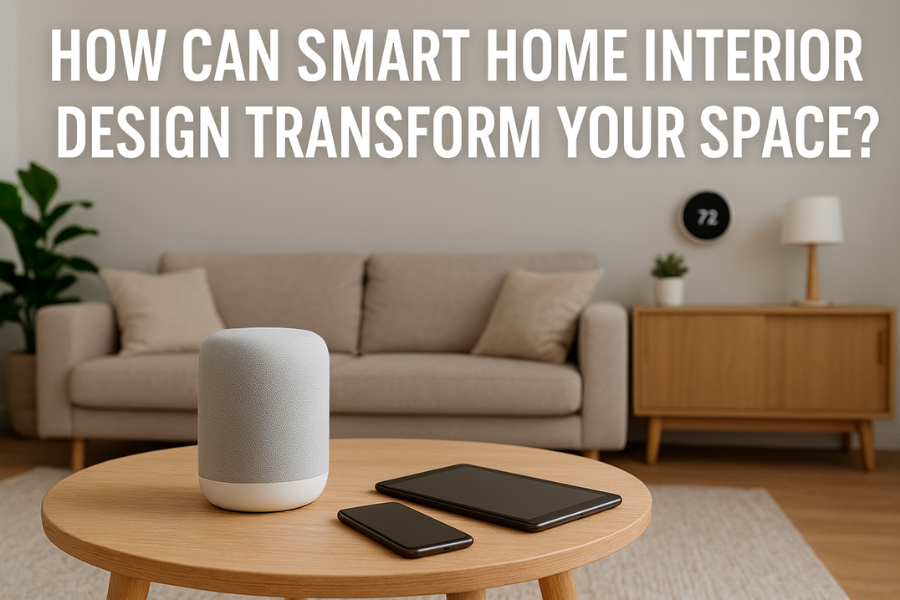
Smart home interior design blends technology with style. You gain comfort, efficiency, and elegance in one plan. Every device fits the room without visible clutter.
What Defines Smart Home Interior Design?
A smart home interior design plan hides wires, hubs, and speakers. Devices match the color scheme and lines of the room. You control lighting, temperature, and appliances from a phone or voice command.
Industry data shows that over 57% of homeowners in Europe now prefer integrated smart systems over standalone gadgets (Statista, 2024). That trend grows each year as technology becomes more discreet.
How Does It Improve Daily Life?
You set custom scenes for work, relaxation, or entertainment. Lights shift tone for a dinner party. Curtains close automatically at sunset. A thermostat adjusts before you arrive home.
Energy savings matter too. Smart thermostats can cut heating and cooling costs by up to 23% annually (U.S. Department of Energy). That means lower bills and a smaller carbon footprint.
Which Features Add the Most Value?
Integrated audio-visual systems hide speakers and screens.
Smart window treatments adjust to sunlight and temperature.
Interactive surfaces display calendars, weather, or news.
Smart kitchen appliances manage groceries and cooking.
Climate control systems learn your habits for maximum comfort.
Biophilic tech supports indoor gardens and natural light cycles.
Why Does Design Integration Matter?
A home with built-in smart systems feels seamless. No bulky devices interrupt the flow of the room. Every element serves both function and form.
Research from Houzz (2024) shows that homes with integrated smart design sell 8-12% faster than similar properties without it. Buyers value the combination of style and technology.
How Can Lighting Shape the Atmosphere?

Smart lighting creates mood and function in one system. You wake up to a soft sunrise glow. You host guests under warm ambient tones. You relax with dimmed lights for a movie night.
Philips Hue and LIFX lead the market in adaptive lighting. Both offer app and voice control. You adjust brightness, hue, and color temperature instantly.
What Role Does Climate Control Play?
Smart climate systems like Nest and tado° adapt to your schedule. They track patterns and adjust automatically. You save energy without sacrificing comfort.
In northern climates, heating efficiency matters most. In warmer regions, cooling control is key. Both benefit from discreet integration into walls or panels.
How Do Smart Kitchens Improve Function?
Smart appliances streamline cooking and storage. Fridges track inventory. Ovens follow voice commands. Dishwashers optimize water and energy use.
Bosch and Miele lead in European markets. Their designs hide technology behind sleek cabinetry. The result is a kitchen that feels social yet high-tech.
Can Window Treatments Boost Efficiency?
Motorized blinds and smart glass manage light and heat. They open for natural light in the morning. They close to block heat in the afternoon.
Somfy and Loxone offer systems that sync with weather data. Smart glass technology is advancing fast. Soon, windows will tint automatically without blinds.
How Does Biophilic Tech Enhance Well-being?
Indoor gardens with automated watering bring nature inside. Circadian lighting supports natural sleep cycles. Air quality sensors maintain a healthy environment.
Studies show that biophilic design can improve productivity by up to 15% (Human Spaces Report, 2023). Smart systems make it easy to maintain.
What Is the Future of Smart Home Interior Design?
AI-driven systems will anticipate needs before you act. Furniture will include built-in charging, speakers, and displays. Materials will adapt to temperature and light.
The market for smart home technology is projected to reach $231 billion by 2028 (MarketsandMarkets, 2024). Interior design will evolve alongside it.
Final Thought
Smart home interior design gives you more than convenience. It creates a living space that feels intelligent, stylish, and efficient. Every feature works in harmony with the room’s design. You enjoy comfort, save energy, and increase property value. The future of home design belongs to spaces that think ahead and look timeless.
FAQs
Q1. How does smart home interior design differ from a standard smart home setup?
A standard smart home focuses on device function. Smart home interior design blends those devices into the architecture and decor from the start.
Q2. What are the most popular smart home features for interiors?
Integrated lighting, climate control, hidden audio-visual systems, and automated window treatments lead the list.
Q3. Can smart home interior design improve energy efficiency?
Yes. Smart thermostats, automated blinds, and motion-sensing lights can cut energy use by up to 23% annually (U.S. Department of Energy).
Q4. Which brands lead in smart lighting and climate control?
Philips Hue and LIFX dominate lighting. Nest and tado° are strong in climate control.
Q5. Is smart home interior design suitable for older homes?
Yes. Technology can be integrated into historic or traditional spaces without harming the original style.
Q6. How much can integrated smart design increase property value?
Homes with built-in smart systems can sell 8–12% faster and at higher prices (Houzz, 2024).
Q7. What role does biophilic technology play?
It supports well-being through indoor gardens, circadian lighting, and air quality monitoring.
Q8. What is the future of smart home interiors?
AI-driven systems will anticipate needs, furniture will include built-in tech, and materials will adapt to light and temperature.
Explore smart living, design tips, and home innovation at Homedwellish.com