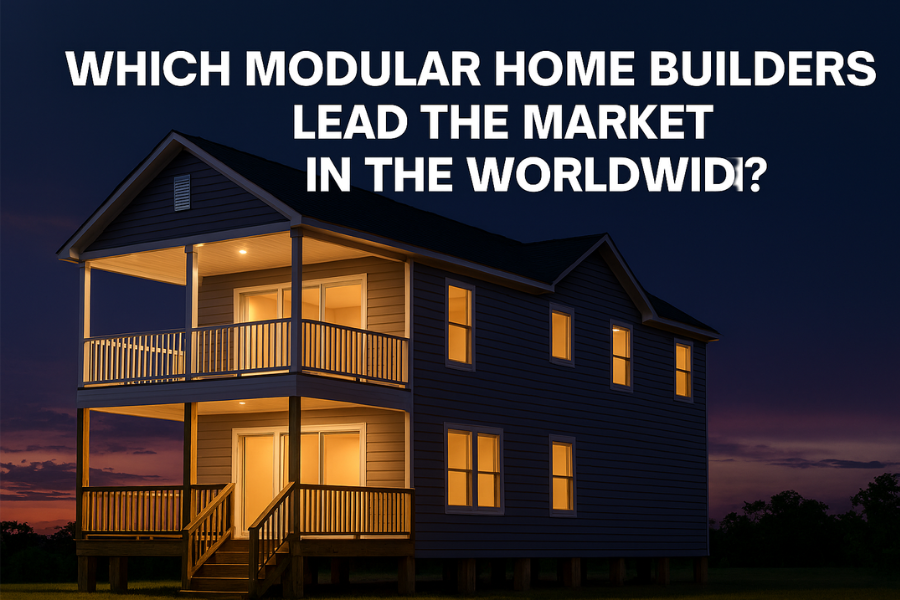
Modular construction has moved into the mainstream. You now see it in residential suburbs, urban infill projects, and large-scale commercial developments. Industry analysts project the global modular construction market to reach $131 billion by 2030 (Allied Market Research). That growth comes from speed, cost control, and sustainability.
Who Dominates the Modular Home Market?
A few companies set the pace in the American market. Each offers a distinct advantage for buyers.
Clayton Homes You get affordability, speed, and variety. The company ranks among the largest modular and manufactured home builders. Its eBuilt™ line focuses on energy efficiency and cost savings. Industry awards from the Manufactured Housing Institute confirm its reputation.
Impresa Modular You gain full customization. The company operates nationwide with local design and planning teams. Its Project Homestyler tool lets you create layouts from scratch. Prices often range from $200 to $245 per square foot.
Champion Homes You see over 70 years of experience. The company offers single and multi-section homes with award-winning designs. Buyers value its attention to detail and broad floor plan selection.
Commodore Homes You find budget-friendly options. The company sells in more than 35 states through a strong dealer network.
Connect Homes You get modern, efficient design. The California-based builder delivers pre-engineered homes with fast build times.
Deltec Homes You secure eco-friendly, weather-resistant builds. Its round designs withstand hurricanes and use sustainable materials.
Dvele You experience smart living. Its homes integrate the DevleIQ platform for energy monitoring and automation.
Which Companies Lead Modular Construction Worldwide?
Global leaders bring scale, engineering expertise, and advanced manufacturing.
Laing O’Rourke (U.K.) You see large-scale modular projects in infrastructure and high-rise sectors.
ATCO (Canada) You get modular solutions for residential, industrial, and commercial needs.
Red Sea International Company (Saudi Arabia) You find modular buildings for diverse global applications.
Sekisui House Ltd. (Japan) You benefit from sustainable, pre-engineered homes with advanced energy systems.
Guerdon Modular Buildings (U.S.) You see leadership in large-scale commercial modular projects in the Western U.S. and Canada.
Lendlease Corporation (Australia) You get modular solutions for urban regeneration and infrastructure.
Which Innovators Drive 3D-Printed Housing Forward?
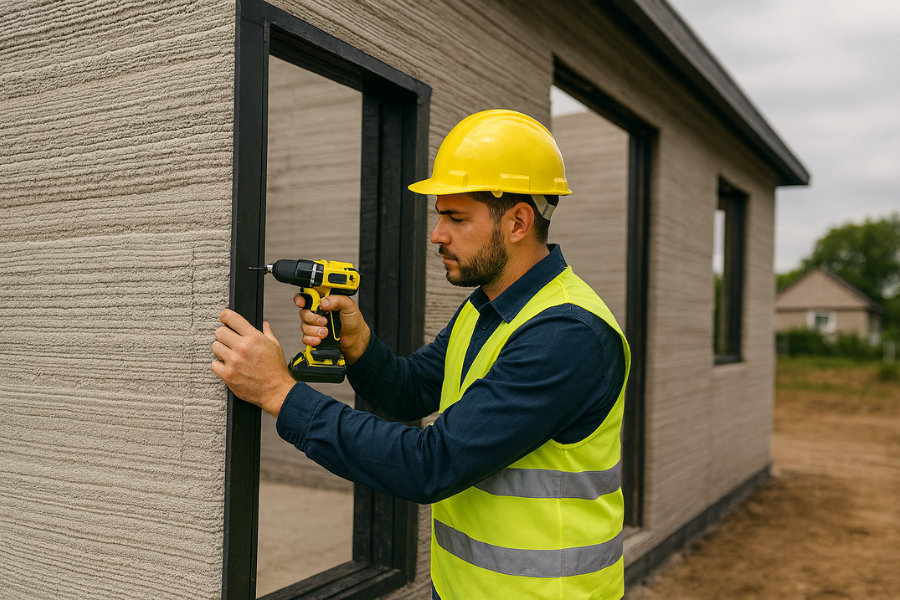
3D printing adds speed and design freedom to modular construction. MarketsandMarkets projects the 3D construction printing sector to grow at 91% CAGR from 2023 to 2030.
ICON (U.S.) You see large-scale 3D-printed homes built with the Vulcan printer.
Apis Cor (U.S./Russia) You get mobile printers that can produce a home in 24 hours.
COBOD International (Denmark) You find modular 3D printers for residential and commercial projects.
Peri 3D Construction (Germany) You see hybrid modular and 3D-printed housing.
WASP (Italy) You get eco-friendly homes made from natural materials like clay.
XtreeE (France) You find complex architectural designs printed at scale.
SQ4D (U.S.) You see fully automated 3D-printed home construction.
CyBe Construction (Netherlands) You get mobile concrete printers for rapid builds.
Mighty Buildings (U.S.) You find prefab and 3D printing combined for sustainable housing.
Constructions-3D (France) You see portable 3D printing systems for on-site builds.
How Can You Choose the Right Modular Home Builder?
Your choice depends on design needs, budget, and location. Ask yourself:
- Do you want full customization or a ready-to-build plan?
- Will you need advanced energy efficiency or smart home integration?
- How important is speed compared to cost?
Look at customer reviews, warranty terms, and material quality. Check if the builder operates in your state or country. Compare build times and price per square foot.
Why Does Modular Construction Matter Now?
You face rising housing costs and growing demand for sustainable solutions. Modular construction offers a path to faster, cleaner, and more affordable housing. The leaders in this space combine engineering precision, design flexibility, and environmental responsibility.
Final Thoughts
You now have a clear view of the top modular home builders in the U.S. and worldwide. Each company offers unique strengths in design, speed, and sustainability. Market data shows modular construction growing fast, with billions in projected value by 2030. That growth creates more choice for buyers and investors.
Your next step is to match your needs with a builder’s strengths. Look at cost per square foot, build time, and energy efficiency. Check reviews and warranty terms before you commit. The right choice will give you a home that meets your budget, style, and long-term goals.
FAQs
Q: How long does it take to build a modular home?
You can expect most modular homes to be completed in 3 to 6 months. The timeline depends on design complexity, permits, and site preparation.
Q: Are modular homes cheaper than traditional homes?
You often pay 10% to 20% less than for a site-built home. Savings come from factory efficiency and reduced labor costs.
Q: Can modular homes meet green building standards?
Yes. Many builders offer LEED-certified or Net Zero designs. Energy-efficient materials and systems reduce long-term costs.
Q: Do modular homes last as long as traditional homes?
Yes. Modular homes use the same materials and meet the same building codes as site-built homes. Lifespans often exceed 50 years with proper maintenance.
Q: Can you customize a modular home?
Yes. Many builders offer full customization. You can choose layouts, finishes, and smart home features.
Q: What is the average cost per square foot for a modular home?
You can expect $150 to $250 per square foot in most U.S. markets. Location, design, and materials affect the final price.
Organic digital marketing for home improvement businesses—SEO, local search, content that attracts quality leads.” homedwellish.com