
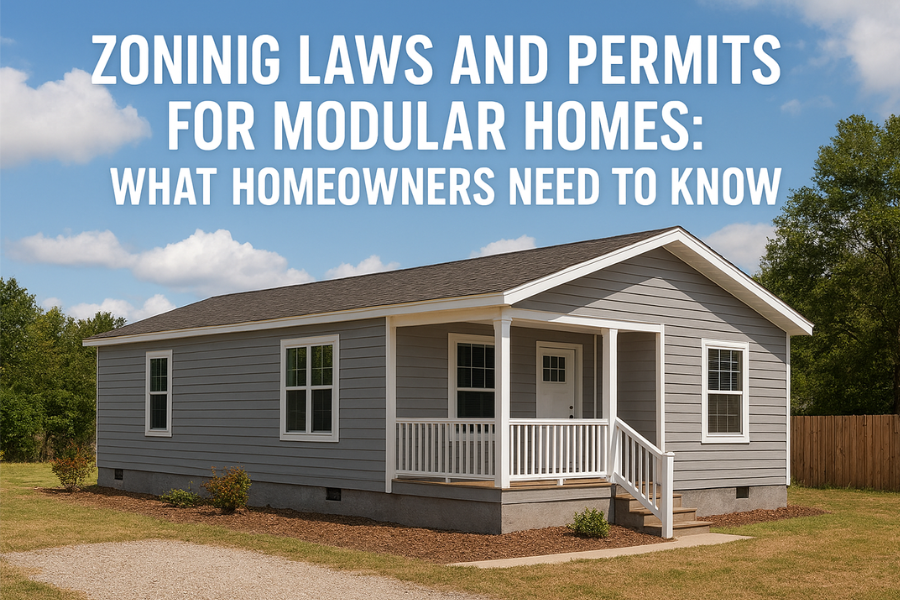
A modular home project starts with understanding the rules. State and local building codes control modular homes. Manufactured homes follow the federal HUD Code. The difference changes how you buy land and secure permits.
What Makes Modular Homes Different From Manufactured Homes?
A modular home meets the same building codes as a site-built house. A manufactured home meets HUD standards for safety and energy efficiency. A modular home sits on a permanent foundation and becomes real property. A manufactured home stays on a permanent chassis for transport.
Local zoning treats modular homes like traditional houses. Manufactured homes face stricter placement rules. Some areas limit them to mobile home parks or rural zones.
How Do Zoning Laws Affect Modular Homes?
Local zoning codes decide where you can build. They set rules for land use, lot size, setbacks, and height. Some areas require specific roof styles, exterior finishes, or landscaping.
A zoning map shows the allowed use for each parcel. A residential zone may allow modular homes without extra approval. A variance request can help if your plan conflicts with zoning rules.
What Steps Help You Secure Permits?
A modular home project needs several permits before delivery.
Step 1: Preliminary Studies A feasibility study confirms what you can build. A geotechnical survey checks soil for foundation design.
Step 2: Zoning Clearance You confirm the land is zoned for modular housing. A variance application may be needed for exceptions.
Step 3: Building and Utility Permits A building permit requires site, foundation, and elevation plans. Utility permits connect water, sewage, gas, and electricity. Special permits may cover driveways, septic systems, or environmental impact.
Step 4: Post-Construction Approvals A Certificate of Occupancy allows you to move in. Property registration updates local land records.
How Do Arizona Rules Shape Modular Home Projects?

Arizona calls modular homes Factory-Built Buildings (FBBs). The Arizona Department of Housing (ADOH) and the Department of Manufactured Housing (DMH) regulate them.
A permit must be issued and displayed before installation. Only licensed DMH installers can set up the home. An Installation Insignia must be fixed to the rear of the home. Flood-prone areas require a Flood Use Permit. The home must be on an approved permanent foundation.
Zoning district rules in Arizona set maximum height, lot size, and setbacks. A utility site plan must show building size, location, and connections.
What Building Codes Apply to Modular Homes?
Arizona enforces the International Building Code (IBC) and International Residential Code (IRC). It also applies the International Mechanical, Plumbing, Fuel Gas, and Energy Codes. The National Electric Code (NEC) ensures electrical safety.
Manufactured homes follow HUD standards under Parts 3280–3288. These cover construction, installation, and dispute resolution.
How Can You Avoid Delays?
An experienced modular home builder can guide you through permits and inspections. Local planning offices can confirm current rules before you buy land. Site inspections will check the foundation, assembly, and utility hookups.
Industry data shows that early zoning checks reduce project delays by up to 40% (NAHB, 2023). A clear permit plan can cut approval time by several weeks.
Why Does Preparation Matter?
A modular home offers speed, cost control, and quality. Success depends on meeting zoning rules and securing permits early. A clear process protects your investment and avoids costly setbacks.
FAQs
Q1: How do you get a permit for a modular home?
You submit detailed site, foundation, and elevation plans to your local building department. A building permit is issued after review and approval.
Q2: What zoning rules apply to modular homes?
Local zoning codes decide land use, lot size, setbacks, and height limits. Some areas also require specific exterior designs.
Q3: Do modular homes need a permanent foundation?
Yes. State and local codes require modular homes to be installed on an approved permanent foundation.
Q4: How long does the permitting process take?
The process can take several weeks to months. Timelines depend on local review speed, required studies, and inspections.
Q5: What inspections are required for modular homes?
Inspections cover the foundation, assembly, and utility connections. A final inspection is needed before a Certificate of Occupancy is issued.
Q6: Are modular homes allowed in flood zones?
Yes, but a Flood Use Permit is required. Additional elevation and foundation standards may apply.
Q7: How are modular homes regulated in Arizona?
The Arizona Department of Housing and the Department of Manufactured Housing oversee compliance. Rules cover permits, licensed installers, and installation insignias.
Final Thought
A modular home can be a smart investment when you understand the rules. Clear zoning knowledge, accurate permits, and professional guidance protect your time and budget. Every successful project starts with preparation and ends with a home that meets every code and standard. Your next step is simple — confirm your zoning, plan your permits, and work with experts who know the process inside out.
Organic digital marketing for home improvement businesses—SEO, local search, content that attracts quality leads.” homedwellish.com