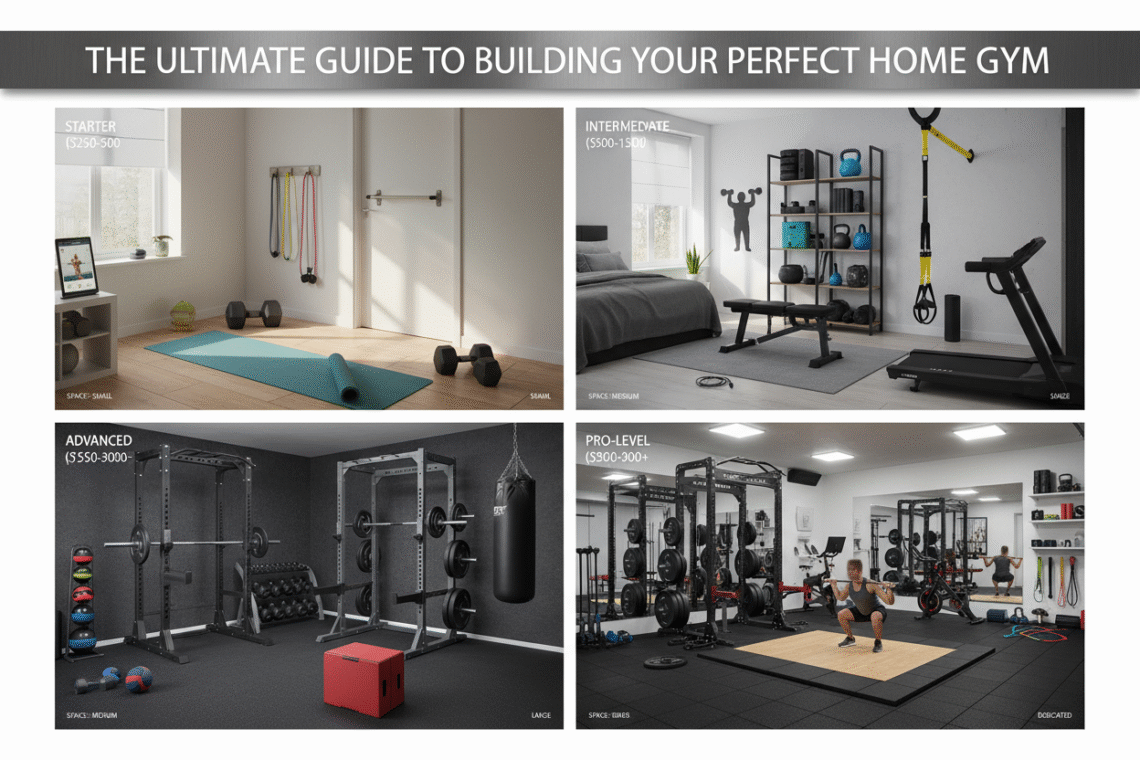
Creating a home gym is more than just buying equipment — it’s about designing a space that aligns with your fitness goals, budget, and lifestyle. Whether you’re starting with $100 and a corner of your bedroom or transforming your garage into a professional-grade training space, this guide will walk you through every step.
Step 1: Define Your Goals and Space
Before you spend a single dollar, get crystal clear on:
- Your fitness objectives — Strength, endurance, weight loss, mobility, or a mix.
- Your available space — Measure dimensions, ceiling height, and clearance for movement.
- Environmental factors — Flooring, lighting, ventilation, and temperature control.
Pro Tip: If you plan to lift heavy, ensure your floor can handle the load. For cardio, prioritize airflow and noise control.
Step 2: Choose the Right Location
- Garage Gym – Spacious, ideal for racks and cardio machines. Add insulation or fans for comfort.
- Basement Gym – Naturally cooler, but invest in dehumidifiers or ventilation to prevent mold.
- Spare Room / Apartment Corner – Perfect for compact setups with foldable or wall-mounted gear.
Step 3: Invest in Proper Flooring
- Rubber Mats – Durable, shock-absorbing, perfect under heavy weights.
- Foam Tiles – Affordable, softer, great for bodyweight or yoga.
- Cork Flooring – Eco-friendly with good grip, but may need sealing.
Step 4: Build Your Equipment Arsenal
Beginner & Small Space Essentials
- Resistance bands (strength + mobility)
- Adjustable dumbbells (space-saving)
- Kettlebells (dynamic, full-body training)
- Jump rope (low-cost cardio)
- Exercise mat (yoga, stretching, floor work)
- Doorway pull-up bar (upper body strength)
Strength Training Upgrades
- Power rack or squat stand with safety bars
- Olympic barbell + bumper plates
- Adjustable weight bench (incline/flat)
Cardio & Functional Fitness
- Rowing machine (low-impact, full-body)
- Exercise bike or fan bike (HIIT-friendly)
- Plyo box, medicine ball, suspension trainer
Step 5: Layout & Safety Planning
- Map your space with painter’s tape before buying.
- Place large, fixed equipment first; fill in with smaller gear.
- Keep electrical equipment near outlets.
- Maintain safe clearance zones for movement.
Step 6: Storage & Maintenance
- Wall-mounted racks, shelving, and hooks keep gear organized.
- Wipe down equipment after each use to prevent corrosion and bacteria.
- Inspect bolts, cables, and moving parts monthly.
Real-World Example: A $5,000 Garage Gym Transformation
Two years ago, one fitness enthusiast turned a cluttered garage into a dream training space:
- Starter gear: Kettlebell, yoga mat, portable speaker.
- Core upgrades: Rogue Adjustable Bench 3.1, PAPABE 150-lb dumbbell set, Rogue plyo box.
- Cardio splurge: NordicTrack X22i incline treadmill.
- Strength setup: Rogue RML-390F rack, TB-2 trap bar, Ohio Power Bar, 260-lb plate set.
The result? A space used daily by the whole family, tailored to their exact training style.
Budget-Friendly Inspiration
If you’re starting small:
- Watch The $100 Budget Home Gym Guide (w/ 4 Different Setup …) for creative, low-cost setups.
- See I Built a Budget Amazon Home Gym For Bodybuilding! for a full Amazon-based build.
- Learn from How To Build A Budget Home Gym For Cheap for smart cost-cutting tips.
- Explore How to BUILD a $1000 HOME GYM on AMAZON in 2023! for a mid-range, high-value setup.
- Check I Built A Home Gym Using Only The Highest Rated Products … to see what top-rated gear delivers.
- Review I Tested Amazon’s Best Selling Budget Multi Gym – SincMill … for honest product performance.
- Compare options in $500 to $1500 HOME GYM from Amazon for scalable investment ideas.
Final Takeaway
A home gym is an investment in your health, time, and convenience. Start with the essentials, expand as your needs grow, and always prioritize safety, quality, and functionality over flashy extras. Whether you’re lifting in a garage, cycling in a basement, or skipping rope in a spare room — the best gym is the one you’ll actually use.
FAQs
1. How much does it cost to build a home gym?
A basic setup can start at $100–$300 with essentials like resistance bands, a yoga mat, and adjustable dumbbells. A mid-range setup with a bench, barbell, and cardio machine may cost $1,000–$2,500. A premium, fully equipped gym with racks, specialty bars, and high-end cardio gear can exceed $5,000.
2. What is the minimum space needed for a home gym?
You can start with as little as 20–30 sq. ft. for compact setups (bands, kettlebells, mat work). For a full rack, bench, and barbell training area, aim for 100–150 sq. ft. with at least 7–8 ft. ceiling height.
3. What flooring is best for a home gym?
- Rubber mats – Best for heavy lifting and durability.
- Foam tiles – Affordable and comfortable for bodyweight or yoga.
- Cork flooring – Eco-friendly with good grip, but needs sealing.
4. What equipment should I buy first?
Start with versatile, space-saving gear:
- Adjustable dumbbells or kettlebells
- Resistance bands
- Jump rope
- Pull-up bar
- Exercise mat
5. How do I keep my home gym safe?
- Maintain clear walkways around equipment.
- Use proper flooring to prevent slips and protect your foundation.
- Inspect gear monthly for loose bolts or frayed cables.
- Store weights on racks to avoid tripping hazards.
6. Can I build a home gym on a budget?
Yes. Many people start with second-hand equipment, resistance bands, and bodyweight exercises. You can expand gradually as your budget allows.
7. Is a garage or basement better for a home gym?
- Garage – More space, but may need insulation or fans.
- Basement – Cooler, but requires ventilation to prevent moisture issues.
- Spare room – Convenient, but best for compact setups.
8. How do I maintain my home gym equipment?
- Wipe down after each use to prevent rust and bacteria.
- Lubricate moving parts as per manufacturer guidelines.
- Replace worn grips, cables, or padding promptly.
9. What’s the difference between a squat rack and a power rack?
- Squat rack – Compact, open design for squats and presses.
- Power rack – Enclosed frame with safety bars for heavy lifts and more exercise variety.
10. Do I need cardio machines in my home gym?
Not necessarily. You can achieve great cardio with jump ropes, HIIT circuits, or outdoor running. However, treadmills, bikes, or rowers are excellent for low-impact, consistent training.Discover smart tips and inspiring ideas for every home at Homedwellish.