Upgrading your home’s siding can transform its appearance, improve insulation, and protect it from harsh weather. The cost depends on the material, the size of your home, the complexity of the design, and local labor rates.
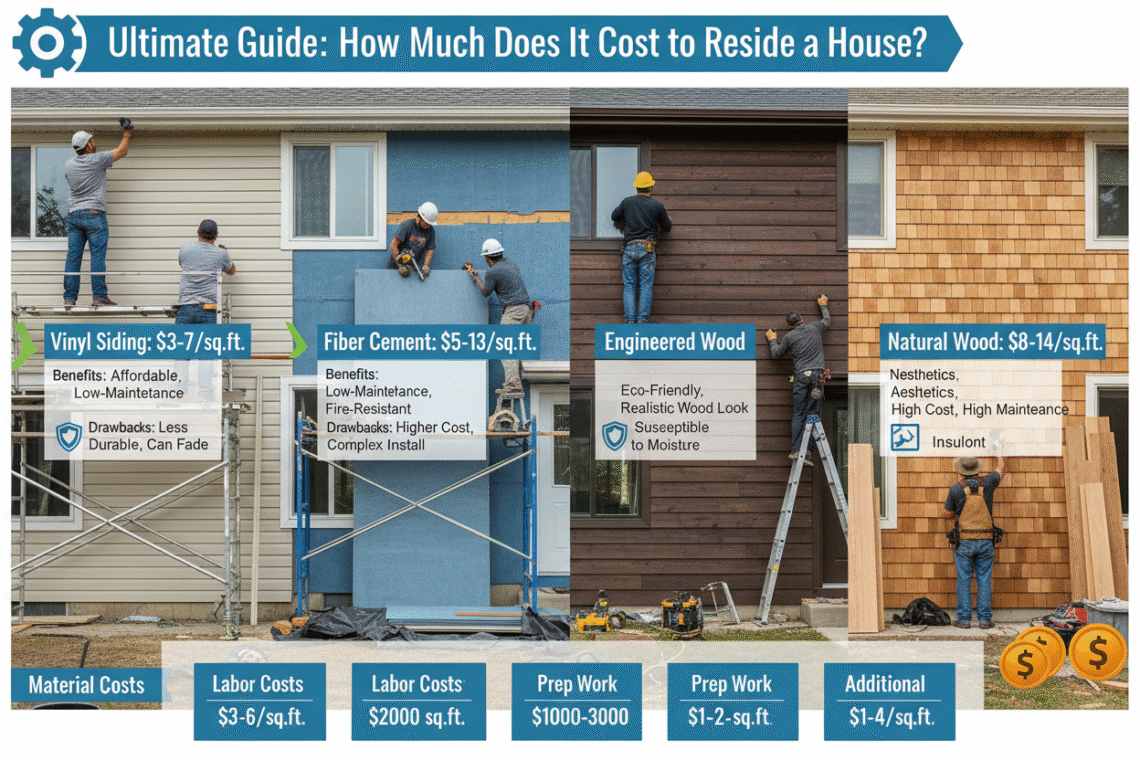
In 2025, you can expect to pay $4 to $30+ per square foot for materials and installation. A 2,500 sq. ft. home can cost between $10,000 and $45,000+.
Average Cost to Reside 2,500 sq. ft. House by Material
| Material | Cost per sq. ft. (Installed) | Total Cost (2,500 sq. ft.) | Lifespan | Key Advantages | Potential Drawbacks |
| Vinyl | $4–$12 | $10,000–$30,000 | 30–40 yrs | Affordable, low maintenance, many colors | Fades in UV, less heat-resistant |
| Aluminum | $6–$10 | $15,000–$25,000 | 25–40 yrs | Weather-resistant, won’t warp | Not fire-retardant, can dent |
| Fiber Cement | $6–$15 | $15,000–$37,500 | 50–75 yrs | Extremely durable, pest-resistant | Heavy, higher labor cost |
| Wood | $5–$15 | $12,500–$37,500 | 20–40 yrs | Natural look, high resale value | High maintenance, prone to rot |
| Stucco | $7–$17 | $17,500–$42,500 | 50–80 yrs | Excellent insulation, long lifespan | Cracks in shifting climates |
| Brick Veneer | $8–$18 | $20,000–$45,000 | 20–75+ yrs | Classic look, low maintenance | Higher upfront cost |
| Natural Stone (Accents) | $15–$45 | $10,000–$25,000 (partial) | 30–75 yrs | Luxury appeal, extremely durable | Very expensive, heavy |
What Factors Affect the Final Price?
House size and layout A larger home or one with complex features like gables and dormers requires more material and labor.
Old siding removal Removing existing siding adds $0.70–$2.00 per sq. ft. for disposal and labor.
Structural repairs Rot, mold, or water damage can add $500–$5,000+ to your project.
Material grade and thickness Premium-grade siding costs more but offers better durability and weather resistance.
Labor rates and location Urban areas and peak seasons (spring/summer) often have higher labor costs. Off-season work can reduce expenses.
Extra features and insulation
- House wrap or insulation: $0.50–$2.00 per sq. ft.
- Trim, soffit, fascia replacement: Varies by design
- Permits: $50–$400
How Do U.S. and Canadian Prices Compare?
U.S. averages range from $4–$30+ per sq. ft. Canadian prices vary due to climate demands, material availability, and currency exchange.
Canadian Average Installed Costs (2025):
- Vinyl: $2.50–$11/sq. ft.
- Fibre Cement: $5–$15/sq. ft.
- CanExel (Engineered Wood): $5–$15/sq. ft.
- Aluminum: $4.50–$12/sq. ft.
- Suretouch: $8–$15/sq. ft.
- Wood: $10–$25/sq. ft.
- Acrylic Coating: $10–$15/sq. ft.
- Brick: $25–$55/sq. ft.
Choosing the Right Siding Material
When selecting siding, balance budget, aesthetic goals, climate durability, and maintenance requirements:
- Best for Budget: Vinyl, Aluminum
- Best for Longevity: Fiber Cement, Stucco, Brick
- Best for Luxury Appeal: Natural Stone, Brick Veneer
- Best for Eco-Friendly Homes: Engineered Wood, Fiber Cement
Pro Tips to Save on Residing Costs
- Get at least 3 quotes from licensed contractors.
- Schedule off-season for potential labor discounts.
- Mix materials — use premium siding on the front façade and budget-friendly options on less visible sides.
- Maintain regularly to extend lifespan and avoid costly repairs.
How to Estimate Your Project Cost
- Measure exterior wall surface area (not interior square footage).
- Multiply by the cost per sq. ft. of your chosen material.
- Add labor, removal, and extras (insulation, trim, permits).
- Compare quotes and check contractor reviews before committing.
Final Thoughts
Residing a house in 2025 can cost anywhere from $10,000 to $45,000+ depending on your choices. The right material can protect your home for decades, boost its value, and even lower energy bills — making it one of the smartest long-term investments for homeowners.
FAQs
1. What is the average cost to reside in a house?
You can expect to pay $4 to $30+ per square foot for materials and installation. A 2,500 sq. ft. home can cost between $10,000 and $45,000+.
2. Which siding material is the most affordable?
Vinyl siding offers the lowest cost, starting at $4 per sq. ft. in the U.S. and $2.50 per sq. ft. in Canada.
3. Which siding lasts the longest?
Stucco, fiber cement, and brick can last 50 years or more with proper maintenance.
4. How much does it cost to remove old siding?
Removal and disposal add $0.70 to $2.00 per sq. ft. to your total cost.
5. Does siding choice affect home value?
Yes. High-quality siding like brick veneer, fiber cement, or natural stone can boost curb appeal and resale value.
6. Can I save money by residing in my house in the off-season?
Yes. Contractors often offer lower rates in fall or winter when demand is lower.
7. How do I calculate the siding cost for my home?
Measure the exterior wall surface area, multiply by the cost per sq. ft. of your chosen material, then add labor, removal, and extras.
8. What extra costs should I expect?
Possible extras include house wrap or insulation ($0.50–$2.00 per sq. ft.), trim replacement, and permits ($50–$400).
9. Which siding is best for extreme climates?
Fiber cement, stucco, and engineered wood perform well in areas with temperature swings, heavy rain, or snow.
10. How often should siding be maintained?
Vinyl and aluminum need occasional cleaning. Wood requires sealing or staining every few years. Stucco and brick need periodic inspections for cracks.“Your space, your style: design, decor, and dwelling ideas at HomeDwellish.”