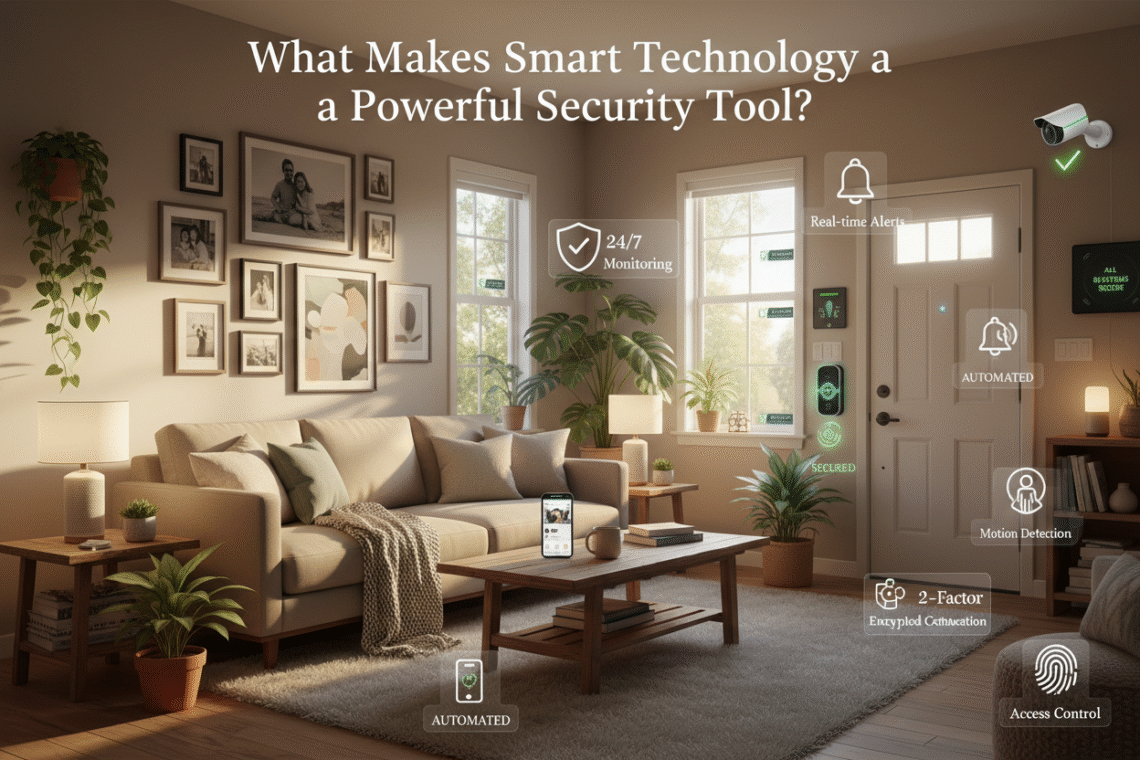
Smart technology creates a digital shield around your home. You gain control over data, access, and alerts without relying on physical barriers. AI, remote access, and privacy controls work together to protect your space.
Smart systems now dominate the home security market. According to Statista, global smart home revenue will reach $182 billion by 2025. That growth reflects rising concerns about cyber threats and digital privacy.
You need more than locks and alarms. You need intelligent systems that adapt to threats and respond instantly.
How Does Smart Tech Strengthen Non-Physical Security?
Smart devices create invisible layers of protection. You manage access, monitor activity, and control data from anywhere.
AI threat detection identifies unusual patterns. It flags deviations in household routines and reduces false alerts. You receive accurate notifications without wasting time.
Cybersecurity features block unauthorized access. WPA3 encryption, isolated networks, and multi-factor authentication stop intruders before they reach your data.
Smart systems offer remote control. You lock doors, view camera feeds, and adjust settings using mobile apps. Geofencing automates responses based on your location.
Simulated occupancy deters intruders. Lights, blinds, and audio routines mimic presence. You maintain security during travel or long absences.
What Threats Arise From Smart Devices?

Smart homes face digital risks. Each device expands the attack surface. Cyberattacks target weak networks. Malware, phishing, and man-in-the-middle attacks exploit vulnerabilities. According to Norton, over 33% of smart homes experience attempted breaches annually.
Data exploitation poses serious risks. Voice assistants and thermostats collect personal information. Hackers use that data for fraud, stalking, or identity theft. Device hijacking allows remote control. Attackers access cameras, locks, or vacuums to spy or manipulate your home. Weak credentials create easy entry points.
Many users ignore default passwords. Reused credentials across platforms increase exposure. Connectivity issues disrupt security. Network outages disable key functions. Professional systems include cellular or battery backups. Self-monitored setups often lack redundancy.
What Steps Improve Smart Home Safety?
You need a proactive mindset. Security starts with your network. Use strong passwords and enable WPA3 encryption. Create a guest network for smart devices. Isolate them from personal computers and phones. Change all default credentials. Use a password manager to store unique combinations. Enable two-factor authentication. Add extra protection to every app and device. Keep devices updated. Automatic firmware updates patch vulnerabilities. Review app permissions. Disable microphones and location tracking when not needed. Erase data before disposal. Decommission devices securely to prevent retrieval.
What Devices Create a Strong Security Ecosystem?
Smart cameras provide surveillance. HD resolution, night vision, and motion alerts improve visibility. You identify threats in real time. Sensors detect movement and entry. Alarms trigger when doors or windows open unexpectedly. Smart locks offer remote access. You assign temporary codes and receive activity alerts. Video doorbells enhance communication. Two-way audio and cloud storage improve visitor management. Central hubs unify control. You manage lighting, sensors, and cameras from one dashboard. Voice assistants add convenience. You lock doors or check feeds using simple commands. Routine automation links devices. You activate security protocols with one action.
Why Should You Upgrade Your Home Security?
Smart technology gives you control. You protect your home, your data, and your peace of mind. Traditional systems rely on manual monitoring. Smart systems adapt, respond, and evolve. You gain flexibility, accuracy, and privacy. You stay connected to your home from anywhere. Would you like a matching meta title, description, and keyword cluster for this article? I can also generate a visual concept to support your branding.
FAQs
What defines non-physical home security?
Non-physical security protects digital access points. You manage data, monitor activity, and control devices remotely. AI, encryption, and network isolation form the core defense.
How does smart technology prevent cyberattacks?
Smart systems block unauthorized access. You use WPA3 encryption, strong passwords, and multi-factor authentication. Devices stay isolated from personal networks to reduce breach impact.
Why do smart devices pose privacy risks?
Smart devices collect sensitive data. You control what gets stored, shared, or deleted. Ethical manufacturers offer end-to-end encryption and transparent data policies.
What happens during a network outage?
Smart systems depend on connectivity. You lose access to remote features during outages. Professional setups include cellular or battery backups to maintain security.
Which smart devices improve home safety?
Smart cameras, locks, sensors, and video doorbells create a secure ecosystem. You receive alerts, monitor activity, and automate responses using mobile apps or voice assistants.
How does AI improve threat detection?
AI analyzes patterns and routines. You receive alerts for unusual activity without false alarms. Systems distinguish between pets, people, and vehicles.
What steps improve smart home security?
You secure your network, change default credentials, enable 2FA, and update firmware. Permissions stay limited. Old devices get wiped before disposal.
Can smart tech simulate occupancy?
Smart routines mimic presence. You automate lights, blinds, and audio to deter intruders. Scheduled actions maintain security during travel.
What risks come from weak passwords?
Default credentials create vulnerabilities. You must use complex, unique passwords across all platforms. Password managers simplify this process.
How do smart locks enhance access control?
Smart locks offer remote access and temporary codes. You receive alerts for every entry. Integration with routines adds convenience and security.”Discover stylish ideas to make your house a home at Homedwellish.”