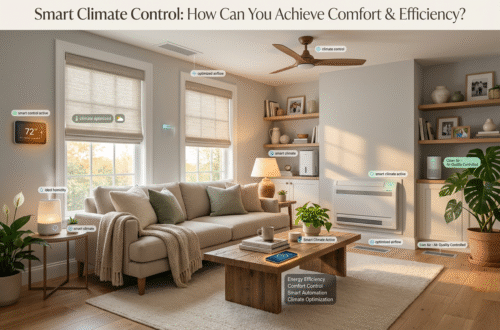
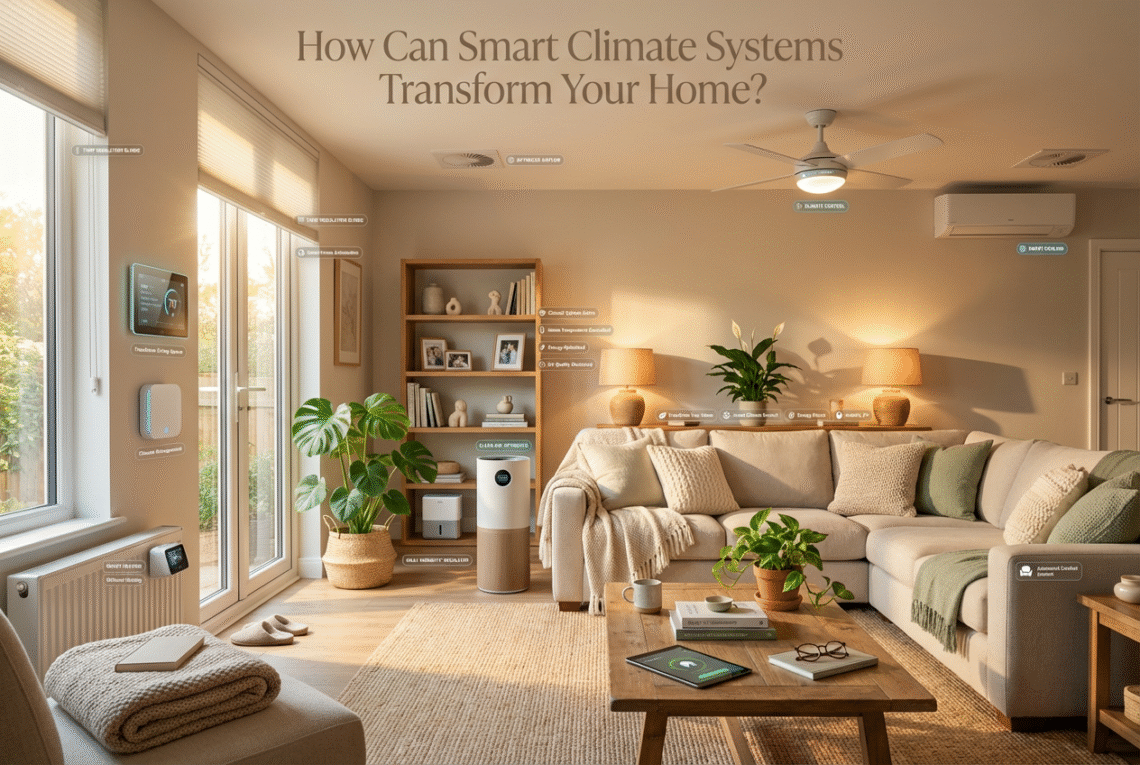
You shape your environment every day. Smart climate systems respond to your choices, your schedule, and your comfort needs. Thermostats, air purifiers, and climate-responsive design work together to create a living space that feels intuitive, healthy, and energy-efficient.
Smart homes now rely on integrated systems. According to Statista, over 63 million U.S. households used smart home devices in 2023. That number continues to grow as homeowners prioritize automation, sustainability, and wellness.
Why Should You Upgrade Your Thermostat?
Smart thermostats do more than adjust temperature. They learn your habits, respond to your location, and connect with other devices to optimize indoor conditions.
Occupancy Sensors: Rooms without movement trigger energy-saving modes.
Geofencing Technology: Your phone’s location activates home or away settings.
Device Syncing: Thermostats communicate with window sensors and purifiers. If a window opens, the system reduces HVAC output.
Zoning Features: Each room maintains its own temperature. Multi-story homes benefit from tailored climate control.
You gain full control through voice commands, mobile apps, and real-time analytics. Smart thermostats reduce energy bills by up to 10%, according to the U.S. Department of Energy.
What Makes Air Purifiers Smarter?
Indoor air quality affects your health, focus, and sleep. Smart purifiers monitor pollutants and adjust performance automatically.
Real-Time Sensors: VOCs, dust, and allergens trigger purification boosts.
IoT Integration: Remote access allows you to manage air quality from anywhere.
Adaptive Fan Speeds: Purifiers respond to pollutant levels, saving energy.
Humidity Management: Some models balance moisture levels to prevent mold.
Quiet operation enhances comfort. You experience clean air without background noise. Studies from Harvard’s T.H. Chan School of Public Health link improved air quality to better cognitive performance and reduced illness.
How Does Climate-Responsive Design Improve Comfort?
Architectural choices shape how your home feels. Climate-responsive design uses natural elements to regulate temperature and airflow.
Building Orientation: North-facing windows reduce heat gain while maximizing daylight.
Thermal Mass Materials: Stone and concrete stabilize indoor temperatures.
Low-E Glass: Windows block heat transfer while preserving clarity.
Natural Ventilation: Atriums and operable windows promote airflow.
Passive Cooling: Night air flushes out daytime heat, reducing AC demand.
Moisture and Sound Control: Materials like cork and clay absorb humidity and noise.
You experience comfort without relying on machines. The design feels intentional, quiet, and balanced.
What Role Does HVAC Design Play in Interior Experience?
HVAC systems influence how spaces feel, sound, and perform. Poor design creates discomfort. Strategic planning delivers harmony.
Air Distribution: Duct placement ensures clean air reaches every zone.
Temperature Balance: Zoning prevents hot or cold spots. You sleep better and focus longer.
Noise Reduction: Insulated ducts and low-speed fans eliminate distractions.
Energy Efficiency: Smart controls and sealed ducts reduce waste.
You avoid constant thermostat adjustments. The system adapts to your lifestyle. According to ENERGY STAR, efficient HVAC systems can cut energy use by 20%.
How Do Unified Systems Create Smarter Interiors?
Smart homes thrive on synergy. Devices and design elements work together to respond to your needs.
Scenario Example: A thermostat detects rising humidity. It signals the purifier to dehumidify. Windows open automatically to ventilate.
Visual Impact: Integrated systems preserve clean lines. You avoid bulky equipment.
Lifestyle Adaptability: The environment adjusts silently. You host, work, and relax without interruption.
You live in a space that feels intelligent. Every element supports your comfort and well-being.
What Should You Expect From Smart Climate Living?
Smart climate living enhances every moment. You breathe cleaner air, enjoy stable temperatures, and save energy. The design feels effortless. The technology works in harmony with your lifestyle.
You invest in comfort, health, and sustainability. The payoff is long-term. Your home becomes a responsive ecosystem, quiet, efficient, and beautifully adaptive.
FAQs
What features define a smart thermostat?
Smart thermostats operate through sensors, geolocation, and predictive algorithms. You manage settings through mobile apps, voice assistants, or automated routines. The system adjusts temperature based on occupancy, time of day, and seasonal patterns.
How much energy can a smart thermostat save?
Smart thermostats reduce energy use by up to 10% annually. Data from the U.S. Department of Energy confirms this impact. You avoid waste through automated temperature control when rooms are vacant or when you’re away.
What benefits do air purifiers offer?
Air purifiers improve indoor air quality by removing allergens, VOCs, and fine particles. HEPA filters and real-time sensors detect pollutants and adjust performance. You experience cleaner air and better respiratory comfort.
What types of pollutants do smart purifiers detect?
Smart purifiers identify pollen, pet dander, smoke, mold spores, and VOCs. Some models also monitor carbon dioxide and formaldehyde. You gain insight into air quality through connected apps and dashboards.
Can climate-responsive design work in extreme climates?
Climate-responsive design adapts to local conditions. In hot regions, shaded orientation and passive cooling reduce heat gain. In colder zones, thermal mass and solar exposure improve warmth retention. You benefit from natural regulation year-round.
Which materials support passive climate control?
Materials with high thermal mass—such as concrete, brick, and stone—stabilize indoor temperature. Low-emissivity glass reduces heat transfer. Cork, clay, and treated wood manage humidity and sound. You create a balanced and quiet interior.
How does HVAC layout influence comfort?
HVAC design affects airflow, temperature consistency, and acoustic performance. Poor duct placement causes uneven heating and stale air. Precision planning ensures clean distribution and silent operation. You feel comfort in every corner.
What does zoning mean in HVAC systems?
Zoning divides a building into separate climate zones. Each zone operates independently. You control temperature room by room, reducing energy waste and improving comfort in multi-level homes or offices.
Do smart systems communicate with each other?
Smart systems connect through IoT platforms. Thermostats, purifiers, and ventilation systems share data. For example, rising humidity triggers the purifier and opens windows to ventilate. You experience seamless climate adaptation.
What value do smart climate systems offer?
Smart climate systems enhance comfort, reduce energy costs, and support sustainability. You increase property value and align your home with modern living standards. The investment delivers long-term benefits.
Transform your living space with smart ideas at homedwellish.