Voice-controlled systems now shape the way modern homes function. They act as the invisible backbone of interiors, merging aesthetic design, smart technology, and human-centered VUI (Voice User Interface). You can create spaces that feel minimalist, functional, and deeply personal.
How Has Voice Technology Changed Interior Design?
Voice assistants have evolved into centralized control hubs for lighting, climate, entertainment, and security. Systems like Amazon Alexa, Google Nest, and Apple HomePod now blend into interiors without visual clutter. Invisible integration ensures technology serves the space rather than dominating it.
What Principles Ensure Seamless Integration?
Aesthetic Harmony
You can match devices to your interior palette. Matte black suits industrial spaces. Brushed brass complements vintage rooms. White hubs fit Scandinavian designs. Vintage-inspired smart tech preserves authenticity in heritage homes.
Strategic Placement
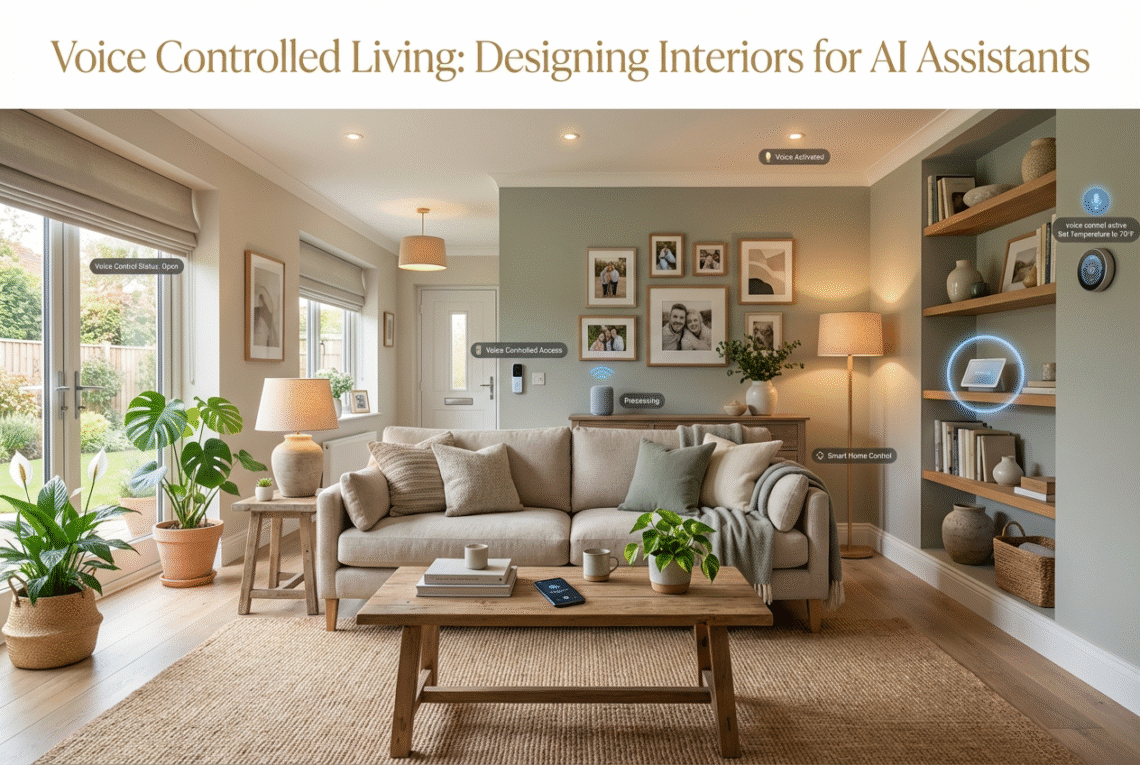
Speakers can sit among books. Hubs can hide behind plants. Shelving can conceal devices. In-wall or in-ceiling speakers with paintable grilles create near-invisible sound systems.
Minimalism and De-Cluttering
Voice commands replace wall switches and remotes. Built-in wiring channels or decorative raceways keep cables out of sight.
Future-Proofing
Modular systems allow upgrades without major renovations. Mesh Wi-Fi ensures strong connectivity in every room.
How Does a VUI Work?
A Voice User Interface processes spoken commands through four components:
| Component | Function |
| Speech Recognition | Converts spoken words into digital commands |
| Natural Language Processing (NLP) | Understands context and intent |
| Speech Synthesis | Provides spoken feedback |
| Feedback Loop | Confirms actions or requests clarification |
Common devices include smartphones, wearables, virtual assistants, smart TVs, and integrated sound systems.
Why Should You Use Voice-Controlled Interiors?
Seamless User Experience Adjust lighting, blinds, and temperature without lifting a hand.
Minimalist Aesthetics Remove bulky switchboards and visible tech clutter.
Personalized Atmosphere Automate routines like a “Good Morning” command that opens blinds, starts coffee, and plays news.
Space Optimization Free walls and floors from panels, remotes, and cable boxes.
Accessibility Empower individuals with limited mobility.
Energy Efficiency Smart thermostats and lighting reduce waste.
Centralized Control Manage all devices from one hub.
Security and Peace of Mind Voice-enabled locks and emergency call features enhance safety.
Increased Property Value Integrated smart systems raise resale prices by up to 20% in some markets.
What Trends Are Shaping VUI and Interior Design?
Localized Voice Design Systems adapt to regional accents and languages.
Contextual Awareness AI learns habits and preferences.
Invisible Tech Devices hide in furniture, walls, or decor.
Sustainability Integration Voice-controlled energy management supports green living.
Multi-Modal Interaction Combine voice with gesture or app control.
How Can You Implement Voice-Controlled Design?
- Select Your Hub Choose Alexa, Google, or Siri based on compatibility.
- Plan Early Integrate wiring and device placement during construction or renovation.
- Ensure Connectivity Use mesh Wi-Fi or extenders for full coverage.
- Design for Flexibility Leave room for future upgrades.
- Prioritize Privacy Select systems with local data processing and clear privacy controls.
Which Real-World Examples Stand Out?
Alexa Full smart home management with custom routines.
Android Auto Voice navigation and search for safer driving.
Siri Accessibility-focused smartphone control.
Josh Nano Ultra-discreet voice control for luxury interiors.
Final Takeaway
The future of interior design is human-centered, tech-enabled, and visually seamless. Voice-controlled systems paired with thoughtful VUI design create homes that adapt to you, save energy, and enhance comfort. The most successful designs make technology disappear into the background, leaving only convenience, security, and style.
FAQs
1. How can voice-controlled systems improve home interiors?
Voice-controlled systems remove clutter, hide technology, and create a clean, minimalist look. They also allow you to control lighting, temperature, and entertainment without physical switches or remotes.
2. What is the role of VUI in smart home design?
A Voice User Interface (VUI) lets you interact with devices through speech. It uses speech recognition, natural language processing, and speech synthesis to execute commands and give feedback.
3. Which devices work best with voice assistants?
Smart speakers, thermostats, lighting systems, TVs, and security devices integrate well. Popular hubs include Amazon Alexa, Google Nest, and Apple HomePod.
4. How can I hide smart devices in my home?
You can place speakers inside shelves, hide hubs behind plants, or install in-wall speakers with paintable grilles. Cable management systems keep wires out of sight.
5. Do voice-controlled systems increase property value?
Yes. Homes with integrated smart systems can see resale value increases of 15–30% in some markets, especially in luxury segments.
6. Are voice-controlled systems energy efficient?
Smart thermostats and lighting systems adjust automatically to reduce energy waste. This can lower utility bills and support sustainable living.
7. How do I choose the right voice assistant for my home?
Select a hub based on device compatibility, privacy features, and ecosystem preference. Consider Alexa for wide compatibility, Google for search integration, or Siri for Apple-focused setups.
8. Can voice control improve accessibility?
Yes. Voice commands help individuals with limited mobility operate devices without physical effort, making homes more inclusive.
9. What trends are shaping the future of voice-controlled interiors?
Localized voice recognition, contextual AI, invisible tech integration, and sustainable energy management are leading trends.
10. How can I ensure privacy with voice assistants?
Choose devices with local data processing and clear privacy settings. Disable features you do not use and review stored voice data regularly.
“Discover expert tips and inspiring ideas for modern living at Homedwellish.”