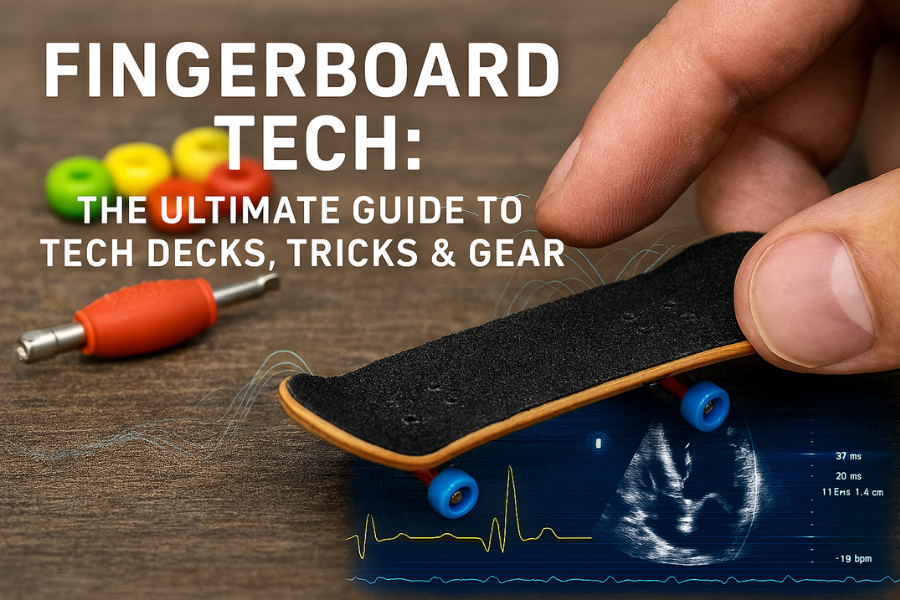
Fingerboard tech covers mini skateboards, hardware, tricks, and the culture around Tech Deck and pro fingerboarding. You learn how boards differ, how to set up a pro-level deck, and how to progress from basic ollies to advanced combos. Do you want gear tips, product picks, and a clear path to improve?
What is Fingerboard Tech and why should you care
Fingerboard tech covers scaled skateboards, hardware, tricks, and the hobby culture around Tech Deck and pro fingerboards. You learn how boards differ and how to set up a pro-level deck. You learn a path from basic ollies to advanced combos. Do you want clear gear advice and a practice plan?
What is a Tech Deck and is it a fingerboard
A Tech Deck is a branded fingerboard designed to mimic real skateboard feel at 96 mm and other scales. A Tech Deck becomes a fingerboard when it has a deck, trucks, wheels, grip tape, and hardware that let you perform skateboard tricks. Collectible Tech Decks pair licensed graphics with small-scale parts that resemble real skate components. Do you prefer ready-made decks or fully custom builds?
What makes a Tech Deck pro
A pro Tech Deck uses quality materials and tuned hardware. A solid plywood or composite deck provides real concave and better pop. Metal trucks with smooth bushings deliver consistent response. Precision bearings or high-grade bushings improve roll. True-to-scale wheels and the right wheelbase boost stability. Tunable hardware lets you swap parts and fine-tune performance. A pro setup feels predictable and responsive for technical lines. Want a parts checklist for upgrades?
How do you set up a pro fingerboard
Pick a deck with real concave and good pop. Fit metal trucks and secure them with matching screws and nuts. Use ABEC or ceramic bearings for smoother roll. Choose polyurethane wheels sized to your deck and terrain. Add griptape trimmed to the deck shape. Tune truck tightness and test ollie and flip response. Test small changes and log the result. Do you want recommended part brands for each step?
How do you practice and progress to advanced tricks
Start with short focused sessions. Film attempts to track consistency and spot tiny errors. Break combos into parts and master each element. Use scaled obstacles that match your deck’s wheelbase. Join local jams or post clips to online communities for feedback. Repeat specific moves until muscle memory forms. Which trick will you master first?
What are typical trick progressions and the hardest moves
Learn push and manual first. Add ollie, shove-it, and basic grinds next. Move to kickflip, heelflip, and boardslide for intermediate skill. Attempt varial flip combos and 360 flips for advanced skill. Tackle multi-flip varial bigspin combos and long-rail tech lines for peak difficulty. Hard tricks demand perfect timing, flick, and board control. Which line will you attempt this month?
How do you maintain and tune a pro setup
Tighten trucks in small increments to find balance. Replace worn wheels to maintain consistent slides. Clean bearings with isopropyl alcohol and lubricate lightly. Swap bushings or add shims to alter turning response. Check screws and nuts before each session to avoid mid-trick failures. Small tune-ups extend part life and improve consistency. Do you log maintenance after each session?
Test deck pop and rebound first. Test truck response for stability and turn feel. Test wheel roll and slide behavior on your usual surfaces. Test hardware durability under repeated impacts. Score graphic fidelity and grip adhesion. Use a short checklist to compare models and justify upgrades. Want a printable test sheet?
Where to buy Tech Decks parts and what to expect on price
Buy Tech Deck singles from retailers for a low-cost entry. Buy multi-packs for variety and parts. Buy pro wooden decks and metal trucks from specialist shops for higher performance. Expect mass-market Tech Deck singles at low price. Expect handcrafted pro kits at a premium. Shop official stores, hobby shops, and vetted online sellers. Will you buy new parts or hunt secondhand deals?
Are Tech Deck longboard and scooter variants worth it
Longboard-style fingerboards replicate downhill and freeride shapes that favor slides and cruiser lines. Scooter-style miniatures offer a different stunt dynamic with bars and decks. Use each type to learn specific control skills that transfer to other setups. Which play style appeals more to you?
Is fingerboarding a real sport
Fingerboarding hosts judged competitions, best-trick contests, and filmed parts contests. The community supports local and international events. The hobby rewards creativity, technical skill, and consistency. You can train, compete, and win recognition. Will you enter a local jam or submit a video part?
FAQs
What makes a Tech Deck pro
A pro Tech Deck features real concave, metal trucks, quality wheels, and hardware that deliver reliable pop and control.
Is fingerboarding a real sport
Fingerboarding features judged events and a pro scene that rewards performance and creativity.
What is the hardest trick in fingerboarding
Multi-flip varial combos on rails and long technical rail lines rank among the hardest tricks.
Is a Tech Deck a fingerboard
Yes. A Tech Deck qualifies as a fingerboard when it includes deck, trucks, wheels, and hardware for skateboard tricks.
How much does a Tech Deck cost?
Single novelty Tech Decks cost little. Pro kits and handcrafted parts cost more. Expect a range from budget to premium.
Where can I buy pro parts?
Specialist online shops, hobby retailers, and community marketplaces sell pro decks, trucks, wheels, and bearings.
Final thoughts
Fingerboard tech combines model accuracy, hardware quality, and focused practice. You improve faster on a tuned setup. You progress through consistent short sessions, careful tuning, and community feedback. Choose parts that match your goals: collect, customize, or compete. Ready to design a pro setup or compare top Tech Deck models?
“Where home inspiration meets real life—welcome to HomeDwellish.”