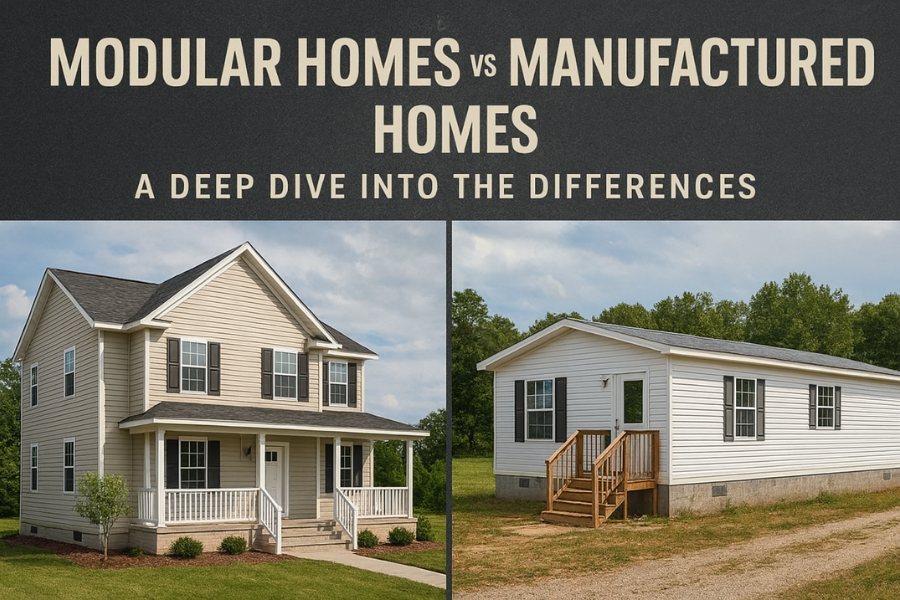
Modular Homes vs. Manufactured Homes
Modular and manufactured homes are affordable housing options built in factories and transported to their final locations. Both provide budget-friendly alternatives to traditional site-built homes. However, they differ in several aspects such as ownership, construction methods, customization, and long-term value.
How Do Modular Homes Compare to Manufactured Homes?
Ownership: Modular homes are considered real property, coming with a deed. This classification allows them to appreciate in value over time, much like traditional homes. On the other hand, manufactured homes are considered personal property and come with a title, similar to vehicles. This makes manufactured homes more prone to depreciation unless placed on a permanent foundation.
Foundation and Placement: Modular homes are built on permanent foundations, which ensures they are immovable once installed. Manufactured homes are generally placed on temporary foundations, like blocks or piers, allowing for relocation. However, frequent relocation can compromise their structural integrity.
What Are the Construction Standards and Quality?
Modular Homes: These homes are built to local and state building codes, ensuring they meet high-quality standards and durability. The materials used in modular homes are typically the same as those in traditional site-built homes.
Manufactured Homes: Built to meet the HUD Code, manufactured homes are designed for affordability and transportability. While they are safe, the materials and construction methods may not always match the quality of modular or site-built homes.
Are Modular Homes or Manufactured Homes More Energy Efficient?
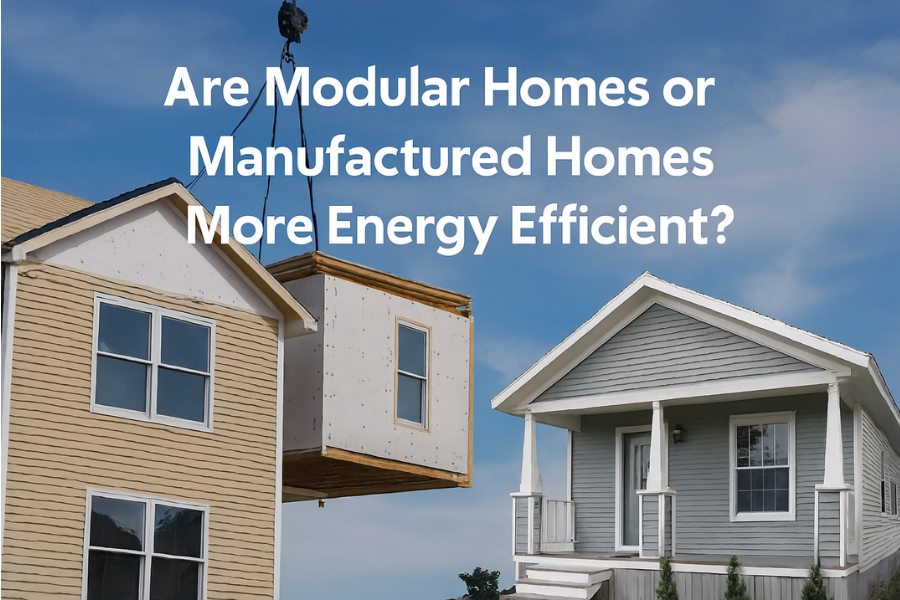
Modular Homes: Built with high-quality insulation and energy-efficient materials, modular homes often meet or exceed local energy codes, leading to lower utility costs.
Manufactured Homes: Energy efficiency in manufactured homes depends on the manufacturer and model. They may include energy-efficient features, but their overall performance can vary.
How Do Construction Times Compare?
Modular Homes: Construction times for modular homes are faster than for site-built homes. Parts are constructed in a factory while site preparation occurs, so the home can be assembled in just a few weeks after the foundation is ready.
Manufactured Homes: Manufactured homes are typically constructed faster, as the entire home is built in one factory process. However, setting up the home on-site can take additional time depending on site conditions.
What Are the Financing Options?
Modular Homes: Modular homes are classified as real property, meaning they qualify for traditional mortgage loans. These loans tend to have lower interest rates and better terms.
Manufactured Homes: Since they are classified as personal property, financing options for manufactured homes are more limited. Buyers typically need specialized loans, such as chattel loans or FHA Title 1 loans, which may come with higher interest rates.
How Do Modular and Manufactured Homes Compare in Terms of Value?
Modular Homes: Modular homes generally retain or increase in value over time, similar to traditional homes. Their classification as real property and compliance with local building codes ensure they appreciate in value.
Manufactured Homes: Manufactured homes often depreciate in value, especially if they are moved. However, placing a manufactured home on a permanent foundation can help mitigate this depreciation.
Which Type of Home Is Right for You?
Choose a Modular Home If:
- You want a permanent residence with a deed.
- You prefer to customize the layout and design.
- You’re looking for a long-term investment with potential for appreciation.
Choose a Manufactured Home If:
- You need a budget-friendly housing option.
- You value mobility and flexibility in location.
- You want a quick, affordable housing solution.
Conclusion
Both modular and manufactured homes offer cost-effective alternatives to traditional homes. Modular homes are more suitable for those seeking durability, customization, and long-term value. Manufactured homes are ideal for those looking for an affordable, mobile option. Consider your specific needs, budget, and long-term goals before making a decision.
About the Author