
Financing a Modular Home
are factory-built structures assembled on-site. These homes offer permanence, energy efficiency, and customization. They stand apart from mobile homes, which are often seen as temporary. While modular homes have many advantages, financing them can be more complicated than traditional homes due to their unique construction.
What Financing Options Are Available for Modular Homes?
FHA Loans
In the U.S., the Federal Housing Administration (FHA) offers loans for modular and manufactured homes. FHA’s Title I and Title II loans are available for those purchasing a home, either with or without land. Title I loans cover both the home and the lot, while Title II loans apply to homes that are affixed to land with lower down payments (starting at 3.5%).
VA Loans
Veterans can use VA loans to finance modular homes. These loans offer 100% financing for both the home and land. No down payment is required, although a funding fee might apply. Homes financed with VA loans must be placed on a permanent foundation.
Conventional Loans
Fannie Mae and Freddie Mac provide loans through their Manufactured Housing (MH) Advantage program. These loans are available for modular homes that meet specific construction and design criteria. They tend to offer lower interest rates compared to some government-backed loans.
Chattel Loans
Chattel loans are used to finance movable properties like mobile homes and, in some cases, modular homes. Though quicker to approve, these loans carry higher interest rates and shorter terms.
Personal Loans
Personal loans can be a practical solution for smaller modular homes. They don’t require collateral, making them faster to secure. However, personal loans usually have higher interest rates and shorter terms compared to traditional mortgages. Loan amounts typically range from $25,000 to $100,000, depending on your credit.
State-Specific Programs
Some states, like New York, offer specialized programs for modular home financing. For example, the State of New York Mortgage Agency (SONYMA) offers low-interest loans to low- and moderate-income buyers, including up to 3% down payment assistance. These loans are designed for homes affixed to permanent foundations.
What Are the Challenges of Financing Modular Homes in Australia?
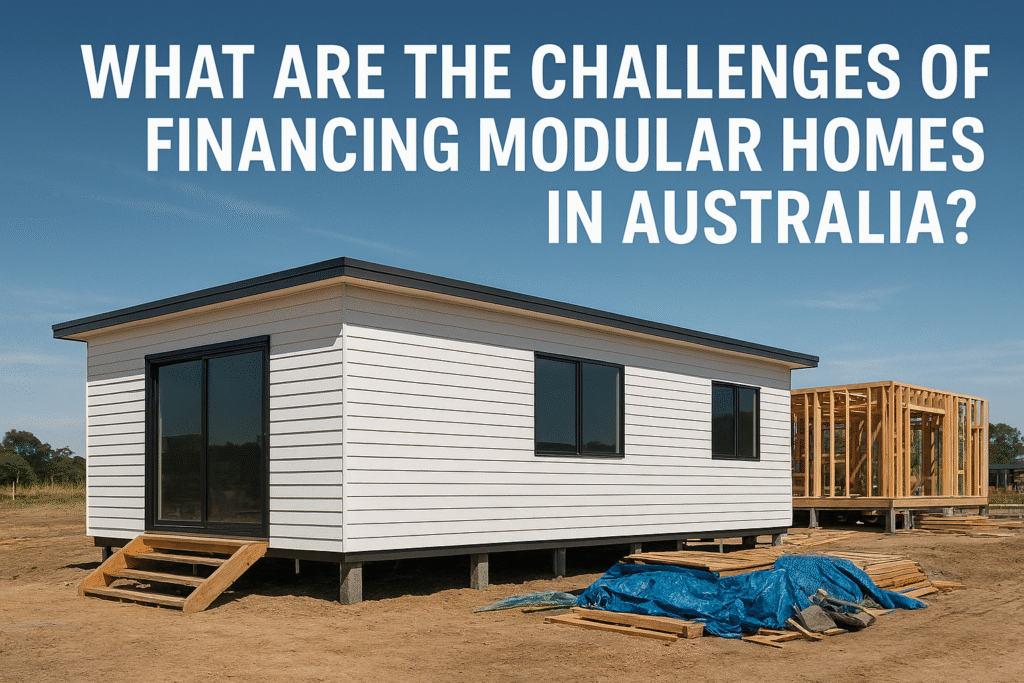
In Australia, modular homes are gaining popularity for their quick construction and cost-effectiveness. However, financing can still be difficult, as many mainstream banks do not offer specialized loans for prefab homes.
Key Tips for Australian Buyers:
Talk to Your Bank Early: Many banks are unfamiliar with modular home financing. Starting the conversation early will help clarify the process and improve your chances.
Work with a Registered Builder: Lenders often require homes to be built by a registered builder. This ensures the quality and permanence of the structure.
Use Equity from Other Properties: If you own land or other property, using equity can make it easier to secure financing.
Consult a Specialist Broker: Finance brokers familiar with modular homes can help navigate the complexities and find the best loan for your situation.
How Can You Improve Your Chances of Getting Modular Home Financing?
Securing financing for a modular home requires careful preparation. Here are some tips to improve your chances of loan approval:
Check Your Credit Score: Lenders will assess your credit history. Clean credit scores improve your chances of getting favorable terms.
Understand Loan Terms: Different loans come with various terms, including interest rates, down payments, and repayment periods. Make sure to compare offers and choose the best one for you.
Gather Documentation: Lenders will require proof of income, employment, and financial documents. Having all the necessary paperwork ready speeds up the approval process.
Prepare for a Larger Down Payment: Some loans require a larger down payment, especially if you’re purchasing land in addition to the home.
Choose a Permanent Location: Many financing programs require the home to be permanently affixed to land you own or plan to purchase. This will increase your financing options.
What Are the Common Challenges When Financing Modular Homes?
Depreciation: Modular homes may lose value over time, which could impact resale potential.
Land Ownership: Many loan programs require that you own the land where the home is placed. This limits options for renters or those purchasing in mobile home parks.
Zoning and Building Codes: Local regulations can affect your ability to build on certain plots of land. Before purchasing land, ensure it’s zoned for modular home placement.
Final Thoughts
Financing a modular home might be more complicated than financing a traditional home, but with the right approach, you can secure the right loan. Be proactive by checking your credit, talking to your bank early, and choosing the best financing option for your situation. Whether you’re in the U.S. or Australia, understanding your financing options and working with the right experts will make the process smoother and more affordable.
FAQs
- What is the difference between modular and mobile homes?
Modular homes are permanent, energy-efficient, and customizable, while mobile homes are movable and typically temporary. - Can I use an FHA loan for a modular home?
Yes, FHA offers Title I and Title II loans for modular homes, covering both the home and land with down payments as low as 3.5%. - Are VA loans available for modular homes?
Yes, VA loans provide 100% financing for modular homes placed on a permanent foundation. - What are chattel loans?
Chattel loans are used for movable properties, including some modular homes. They come with higher interest rates and shorter terms. - Can personal loans be used for modular homes?
Yes, personal loans can finance smaller modular homes, but they typically have higher interest rates and shorter terms. - Are there state-specific programs for modular home financing?
Yes, some states, like New York, offer specialized programs for modular homes, including low-interest loans and down payment assistance. - How can I improve my chances of getting financing?
Ensure your credit score is good, compare loan offers, and gather necessary documentation. Be prepared for a larger down payment, especially if you’re buying land. - Can I finance a modular home without land?
Yes, some loan programs, like FHA’s Title I, allow financing without land if you’re placing the home in a park or community. - Are there challenges financing modular homes in Australia?
Yes, many Australian banks don’t offer specialized loans for prefab homes. Early discussions with your bank and using equity from other properties can help. - What challenges exist when financing modular homes?
Depreciation, land ownership requirements, and zoning/building codes can all impact financing for modular homes. - What are the benefits of modular homes?
They are affordable, energy-efficient, customizable, and quicker to build than traditional homes. - Can a first-time homebuyer apply for a modular home loan?
Yes, first-time buyers can apply, with programs like FHA loans offering lower down payments. - What should I consider when buying land for my modular home?
Check zoning regulations, land accessibility, and utility hookups to ensure the land is suitable for installation. - Can I use a modular home as an investment property?
Yes, but lenders may require a larger down payment or higher interest rates for investment properties.
Bring style, comfort, and creativity to your home — only at HomeDwellish.
About the Author