
Homeownership decisions often depend on cost, efficiency, and durability. Modular and manufactured homes give buyers two alternatives to traditional site-built houses. The two options may sound similar, but the construction methods, financing rules, and long-term value are very different.
You need to know the key differences before making a decision. Which option offers you the best balance of affordability, flexibility, and resale value?
What Defines Modular and Manufactured Homes?
Modular Homes
A modular home is built in sections inside a factory. Those sections are transported to a site and set on a permanent foundation. They follow the same building codes as site-built houses in your state or city.
Manufactured Homes
A manufactured home is also built indoors. However, it follows the federal HUD code instead of local codes. It can be placed on land you own, rented lots, or inside a planned community. Lower costs make it popular for first-time buyers, although financing and zoning can be more restrictive.
What Are the Pros of Modular Homes?
Faster Construction
A modular home can be finished in a few months. The factory builds the modules while the lot is prepared. A traditional house often takes 9–12 months or more.
Lower Costs
Savings can reach 10–30% compared to site-built homes. Bulk material purchasing and reduced labor waste keep expenses under control.
Consistent Quality
Construction indoors avoids weather delays and material damage. Each module passes multiple inspections before delivery.
Better Energy Performance
Tight seams and modern insulation cut energy use. Upgrades like solar panels or Energy Star windows reduce bills further.
Durability
Modules must survive transport, so structures are often stronger than stick-built houses. Many owners report better resistance to storms.
Less Disruption on Site
Most work happens off-site. Noise, dust, and traffic near the property stay minimal.
What Are the Cons of Modular Homes?
Limited Design Flexibility
Floorplans and finishes exist, but structural changes are hard once factory work begins. Buyers who want unique architecture may find options restricted.
Financing Gaps
Some banks remain cautious. Buyers may face longer approval timelines or slightly higher rates.
Land and Zoning Rules
You must buy suitable land. Zoning boards may reject modular housing in certain districts. Delivery cranes also need space for access.
Transport Costs
Large trucks and special permits increase delivery expenses. Modules can be damaged in rare cases.
Resale Value Concerns
Perception lags behind reality. Many still confuse modular homes with mobile homes, which can slow resale or reduce equity growth.
What Are the Pros of Manufactured Homes?
Affordability
The average cost is $49 per square foot, while site-built homes average $107 per square foot (U.S. Census Bureau). That makes them one of the cheapest paths to homeownership.
Faster Move-In
Construction takes just 60–75 days. Buyers facing relocation deadlines or tight budgets often prefer this timeline.
Custom Features
Manufacturers offer choices in layout, kitchens, bathrooms, and exterior finishes. Your home reflects your style without a custom-build price tag.
Energy Savings
Modern models include insulated walls, efficient appliances, and energy-rated windows. Many meet Energy Star certification standards.
Strong Federal Oversight
HUD standards enforce rules on durability, fire safety, and structural stability. The “red HUD seal” confirms compliance.
Location Flexibility
Homes can sit on private land or inside designated communities. Buyers can match lifestyle preferences to location type.
Lower Property Taxes
Many states apply reduced taxes on manufactured housing. Savings add up across ownership years.
Community Perks
Parks and subdivisions often include amenities such as pools, gyms, and playgrounds. Residents enjoy built-in social networks.
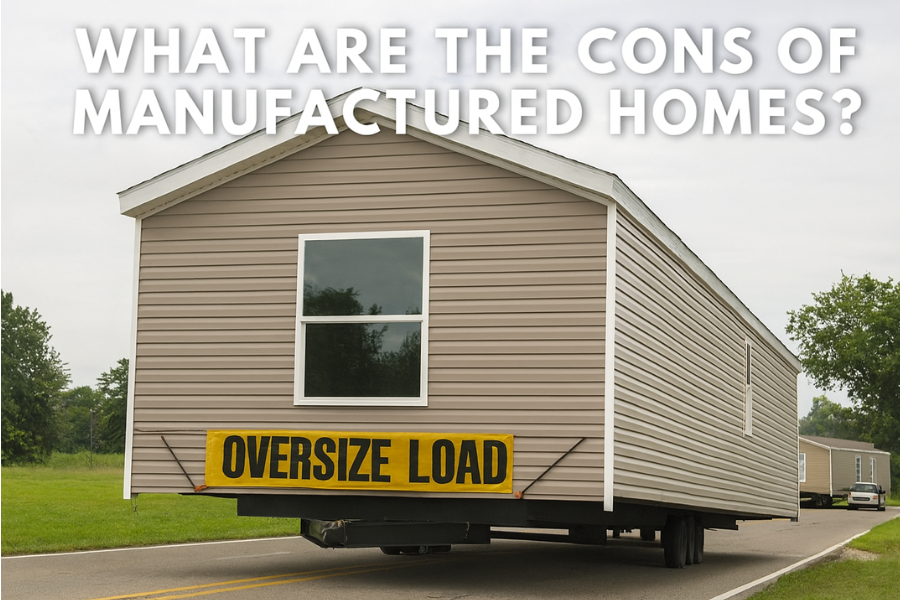
What Are the Cons of Manufactured Homes?
Depreciation Over Time
Unlike modular or site-built homes, many manufactured homes lose value, especially when placed in less desirable areas.
Financing Restrictions
Banks often classify them as personal property, not real estate. That leads to shorter loan terms and higher interest rates.
Zoning Limits
Some cities restrict or ban manufactured housing in certain neighborhoods. Buyers must research carefully before purchase.
Stigma in the Market
Trailer park stereotypes reduce buyer confidence. Older models can be harder to sell.
Land Costs
If you do not already own land, monthly lot rent increases long-term expenses. Prices vary widely by region.
Difficult Upgrades
Post-construction changes or expansions are limited compared to stick-built or modular options.
Insurance Premiums
Risk classifications drive up insurance in disaster-prone areas. Buyers often pay higher annual costs.
Durability Issues in Older Models
Pre-1976 homes built before HUD regulation often lack safety features, making them less reliable today.
Modular vs. Manufactured Homes: How Do They Compare?
| Factor | Modular Homes | Manufactured Homes |
| Codes | Local/state building codes | Federal HUD code |
| Foundation | Permanent only | Permanent or mobile |
| Cost | 10–30% less than site-built | Lowest per sq. ft. |
| Financing | Traditional mortgage available | Limited, often personal loans |
| Customization | Moderate | Moderate, but fixed after build |
| Value | Can appreciate | Often depreciates |
| Timeline | 3–4 months | 2–3 months |
| Best Fit | Buyers focused on durability & resale | Buyers focused on affordability & speed |
How Should You Decide?
A modular home works best for you if you want long-term stability, appreciation potential, and durability close to site-built standards. A manufactured home suits you if affordability and speed matter most.
More than 22 million Americans live in manufactured or modular homes today (Manufactured Housing Institute). As public perception improves and construction technology advances, both housing types continue to gain traction among cost-conscious buyers.
Which option matches your goals? The answer depends on your budget, your location, and the value you want from your home in 10 years.
Explore expert tips and home inspiration at Homedwellish.