
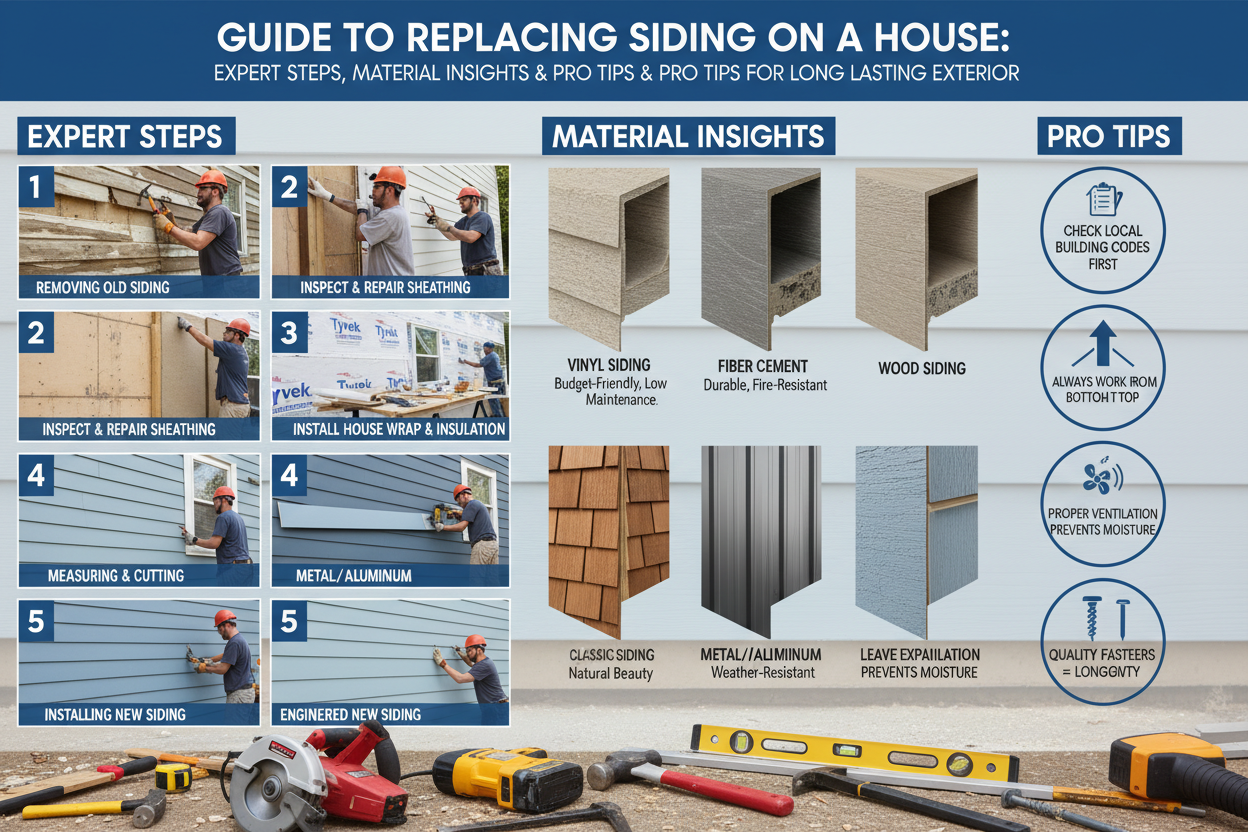
Replacing Siding on a House Expert Steps
Replacing siding protects your home from moisture, pests, and weather damage. A well-executed project can increase curb appeal and improve energy efficiency. You need the right tools, correct techniques, and the best material for your climate.
How Should You Prepare Before Replacing Siding?
Essential Tools
- Pry bar, hammer, utility knife
- Circular or miter saw with correct blade
- Measuring tape, level, chalk line
- Tin snips for vinyl, oscillating multi-tool for wood
Safety Gear
- Heavy-duty gloves, safety goggles, dust mask
- Ear protection for power tools
Site Preparation
- Move furniture, décor, and plants away from the work zone
- Cover shrubs with breathable fabric
- Inform household members about vibrations
- Set up a debris disposal plan to avoid hazards
What Is the Correct Way to Remove Old Siding?
- Start at the top to protect the sheathing
- Use a zip tool for vinyl, pry bar for wood, oscillating tool for hidden nails
- Remove all fasteners and collect nails to prevent tire damage
- Separate recyclable materials from waste
How Do You Prepare the Wall for New Siding?
- Inspect sheathing for rot, mold, or water damage and replace damaged areas
- Install a weather-resistant barrier with overlapped seams
- Use furring strips to level older walls
- Add flashing around windows, doors, and penetrations to direct water away
Which Siding Material Should You Choose?
| Material | Durability | Maintenance | Cost | Lifespan | Best For |
| Vinyl | Good | Low | $ | 10–15 yrs | Budget-friendly, varied colors |
| Wood | Moderate | High | $$ | 20+ yrs | Classic look, customizable finish |
| Fiber Cement | Excellent | Low | $$$ | 40–50 yrs | Harsh climates, fire resistance |
| Plywood | Good | Moderate | $$ | 15–25 yrs | Rustic look, easy panel replacement |
Industry Insight: According to the U.S. Census Bureau, vinyl siding remains the most common exterior cladding in new homes, covering over 25% of builds in recent years. Fiber cement is the fastest-growing segment due to its durability.
What Are the Key Principles for Installing New Siding?
- Start at the bottom with starter strips or base trim
- Leave expansion gaps for vinyl; nail in the center of slots without overdriving
- Follow manufacturer overlap specifications for a watertight seal
- Measure twice, cut once to avoid waste
How Do You Replace Different Types of Siding?
Vinyl Siding
- Remove damaged panels and nails
- Cut new panels with tin snips, allowing 1″ overlap
- Lock into interlocking channels
- Nail with light upward pressure
Wood Lap Siding
- Remove boards between two studs
- Clear nails, paint, and caulk
- Cut new boards to match profile
- Nail, caulk edges, prime, and apply two coats of paint
Plywood Siding
- Remove damaged sheet and keep as template
- Clean area and remove nails
- Cut new sheet with grooves aligned
- Install, caulk edges, prime, and paint generously
Fiber Cement Siding
- Pry off damaged boards
- Remove nails from the board above
- Cut new boards with a fiber cement blade (wear a dust mask)
- Blind-nail bottom boards, face-nail top boards
- Prime and paint to match existing siding
What Are the Final Steps for a Professional Finish?
- Install remaining trim and seal joints with exterior-grade caulk
- Touch up paint for a consistent finish
- Remove all debris to prevent hazards
- Inspect from multiple angles to confirm alignment and sealing
Which Pro Tips Can Extend the Life of Your Siding?
- Avoid installation during heavy rain or extreme temperatures
- Order extra siding from the same manufacturer for color consistency
- Use corrosion-resistant fasteners to prevent rust stains
- Repaint or reseal wood every 3–5 years
- Inspect vinyl and fiber cement annually for cracks or gaps
Final Thoughts
A siding replacement project is one of the most effective ways to protect your home and enhance its appearance. The right preparation, material choice, and installation method can extend the life of your exterior by decades. Every step from removing old panels to sealing the final trim plays a role in preventing moisture damage, improving insulation, and maintaining structural integrity. If you plan carefully, follow proven techniques, and use quality materials, you can achieve a finish that looks professional and performs well in all weather conditions. For complex projects or large-scale replacements, hiring an experienced contractor can save time and ensure compliance with building codes.
FAQs
Q1: How long does a siding replacement take?
A full siding replacement on an average-sized home can take 7–14 days, depending on the material, weather, and crew size. Partial replacements may take only 1–3 days.
Q2: What is the most durable siding material?
Fiber cement siding offers the longest lifespan, often lasting 40–50 years with minimal maintenance. It also provides excellent fire and weather resistance.
Q3: How much does siding replacement cost?
Costs vary widely. Vinyl siding averages $4–$8 per square foot installed, wood ranges from $6–$12, and fiber cement can reach $10–$14. Regional labor rates and home size affect the total.
Q4: Can I replace the siding myself?
Yes, if you have the right tools, skills, and safety equipment. However, improper installation can lead to water intrusion and void manufacturer warranties. Many homeowners choose professional installation for peace of mind.
Q5: How do I maintain my siding after installation?
Inspect annually for cracks, warping, or gaps. Clean vinyl with mild soap and water. Repaint or reseal wood every 3–5 years. Check caulking around windows and doors to prevent leaks.
Q6: Does new siding improve energy efficiency?
Yes. Modern siding materials, especially when combined with insulated sheathing, can reduce heat loss and lower energy bills.
Q7: When is the best time of year to replace siding?
Spring and early fall offer mild temperatures that help materials install correctly and adhesives cure properly. Avoid extreme heat or freezing conditions.
Explore in-depth guides to make your home cozy and stylish at Homedwellish.
About the Author