
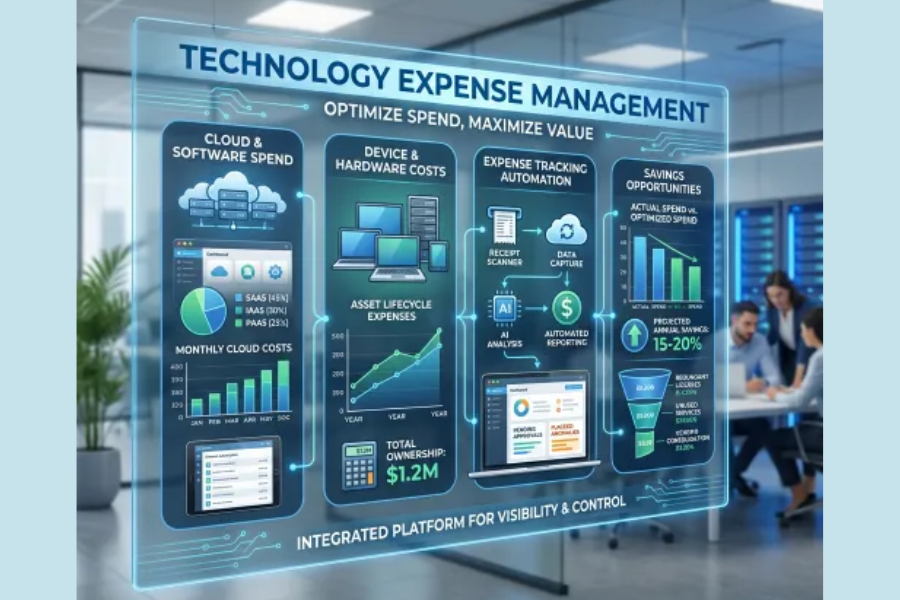
Technology Expense Management
Technology Expense Management (TEM) is the discipline of controlling, tracking, and optimizing costs across cloud, telecom, and mobile services. Modern organizations face increasingly complex IT infrastructures due to Work From Home (WFH) and Bring Your Own Device (BYOD) trends. These changes often create fragmented systems and rising costs.
TEM solutions provide granular visibility into IT service inventories, helping businesses reduce overspending, align IT budgets with business value, and improve ROI on technology investments. According to Tangoe, companies overspend on IT by 20% on average, with waste coming from cloud applications, infrastructure services, and mobile devices. The global TEM market is projected to reach $7.9 billion by 2030, making it one of the fastest‑growing IT management sectors.
What Is Technology Expense Management?
Technology Expense Management (TEM) is the process of controlling, tracking, and optimizing technology costs across cloud, telecom, and mobile services. TEM solutions give organizations granular visibility into IT service inventories, enabling cost savings, resource optimization, and financial predictability.
Why Is Technology Expense Management Important?
Organizations today face complex IT infrastructures due to Work From Home (WFH) and Bring Your Own Device (BYOD) trends. These changes have created fragmented systems and rising costs. TEM helps businesses:
- Reduce overspending on cloud, telecom, and mobile services.
- Align IT budgets with business value.
- Improve ROI on technology investments.
According to Tangoe, companies overspend on IT by 20% on average, with waste coming from cloud applications, infrastructure services, and mobile devices. The global TEM market is projected to reach $7.9 billion by 2030, reflecting rapid adoption.
What Are the Types of Technology Expense Management?
1. Cloud Expense Management (CEM)
CEM solutions focus on cloud spending across AWS, Azure, and Google Cloud. They help organizations optimize usage, enforce governance, and reduce costs.
2. FinOps
Financial Operations (FinOps) is a framework created by the FinOps Foundation to manage cloud costs strategically. Platforms like Tangoe One Cloud enable collaboration, AI‑driven insights, and cost optimization.
3. Mobility Expense Management (MEM)
MEM solutions control telecom and mobile device spending. They often integrate with Mobile Device Management (MDM) strategies to ensure efficiency.
4. Telecom Expense Management (TEM)
Telecom audits uncover wasteful spending such as:
- Devices configured for unnecessary international roaming.
- Ex‑employees still on company data plans.
- Payments for discontinued legacy services.
- Suboptimal bandwidth allocations.
Case Study: A Canadian oil and gas producer saved $150,000/month after a single telecom audit, totaling $1.8 million annually.
What Are the Features of Technology Expense Management Software?
- User‑Friendly Interface
- Automated Expense Tracking
- Machine Learning for Pattern Recognition
- Real‑Time Expense Monitoring
- Alerts for Unusual Spending Patterns
- Advanced Reporting Capabilities
- In‑Depth Analytics for Strategic Decisions
- Seamless Connectivity with Enterprise Systems
- Predictive Analytics for Budgeting
- Scalable Infrastructure for Growth
What Are the Benefits of Adopting Technology Expense Management?
- Cost Reduction: Identify and eliminate wasteful spending.
- Financial Predictability: Align IT budgets with business goals.
- Resource Optimization: Ensure efficient use of cloud, telecom, and mobile assets.
- Digital Innovation: Free up funds for AI, automation, and emerging technologies.
- Compliance and Governance: Enforce policies across IT services.
How Can Businesses Reduce Costs with TEM?
- Conduct regular telecom audits.
- Implement cloud governance frameworks like FinOps.
- Use AI‑powered analytics to detect unusual spending.
- Right‑size connectivity and mobile plans.
- Adopt centralized TEM platforms for visibility and control.
Technology Expense Management vs. Technology Business Management (TBM)
While TBM focuses on aligning IT spending with business strategy, TEM provides the operational tools to track, monitor, and optimize costs. Together, they create a comprehensive financial management framework for IT.
FAQs
1. What is Technology Expense Management?
Technology Expense Management is a process that helps organizations control, track, and optimize technology costs across cloud, telecom, and mobile services.
2. Why is Technology Expense Management important?
TEM is important because companies often overspend on IT. It provides visibility into expenses, reduces waste, and ensures IT budgets deliver measurable business value.
3. What types of Technology Expense Management exist?
- Cloud Expense Management (CEM): Focuses on cloud spending across AWS, Azure, and Google Cloud.
- FinOps: A framework for managing cloud costs strategically.
- Mobility Expense Management (MEM): Controls telecom and mobile device spending.
- Telecom Expense Management (TEM): Audits telecom services to uncover wasteful spending.
4. How can TEM reduce costs?
TEM reduces costs by identifying waste such as unused devices, unnecessary roaming charges, and legacy services. It also uses AI‑powered analytics to detect unusual spending patterns.
5. What are the benefits of adopting TEM software?
- Cost reduction.
- Financial predictability.
- Resource optimization.
- Support for digital innovation.
- Compliance and governance enforcement.
6. What features should TEM software include?
Key features include automated expense tracking, real‑time monitoring, machine learning for pattern recognition, predictive analytics for budgeting, and advanced reporting capabilities.
7. How is TEM different from Technology Business Management (TBM)?
TBM focuses on aligning IT spending with business strategy, while TEM provides operational tools to track and optimize costs. Together, they create a comprehensive IT financial management framework.
8. Can TEM help with cloud cost management?
Yes. TEM integrates with FinOps frameworks and cloud governance tools to optimize cloud usage and reduce costs.
9. What industries benefit most from TEM?
Industries with large IT infrastructures such as finance, healthcare, telecom, and oil & gas benefit most, as they often face high cloud and telecom costs.
10. What is the future of Technology Expense Management?
The TEM market is expected to reach $7.9 billion by 2030, driven by cloud adoption, AI integration, and the need for financial predictability in IT.
“Uncover home improvement inspiration and smart design at HomeDwellish.”
About the Author