
cost to replace plumbing in an old house
Old houses carry charm and history. They also hide plumbing systems that can fail without warning. You need to know the cost to replace plumbing in an old house before problems turn into emergencies. A clear understanding of costs, materials, and labor will help you plan and protect your investment.
What Is the Average Cost to Replace Plumbing in an Old House?
- Whole-house repipe: $4,000 – $15,000+
- National average: $7,500
- Partial replacement: $2,000 – $5,000
- Per fixture replacement: $450 – $1,800
The final price depends on your home’s size, the pipe material, and how easily plumbers can access the system. A larger home with hidden pipes will always cost more. Would you budget for the higher end to avoid surprises?
Should You Choose a Whole-House or Partial Replacement?
Whole-house repipe suits homes over 50 years old or those with lead, galvanized steel, or polybutylene pipes. A 1,500 sq. ft. home may cost $2,280 – $5,120 depending on the material. Full replacement increases property value and eliminates recurring leaks.
Partial replacement works for smaller upgrades, such as a bathroom or kitchen. Costs range from $2,000 – $5,000. It offers short-term savings but may not solve deeper system issues. Do you want a quick fix or a long-term solution?
Which Pipe Materials Offer the Best Value?
| Pipe Material | Cost per Linear Foot | Pros | Cons |
| PEX | $0.40 – $2.00 | Flexible, affordable, freeze-resistant | Shorter lifespan than copper |
| CPVC | $0.50 – $4.00 | Non-corrosive, easy to install | Brittle, needs more fittings |
| Copper | $2.00 – $8.00 | Durable, bacteria-resistant | Expensive, labor-heavy |
| PVC (drains) | $1 – $3 per metre | Affordable, long-lasting | Not for hot water |
| Cast Iron (drains) | Long lifespan (80–100 yrs) | Strong, durable | Heavy, costly to replace |
PEX remains the most affordable choice. Copper provides unmatched durability but raises costs. Which matters more to you—budget or longevity?
How Do Labor and Accessibility Affect Costs?
Labor rates average $80 – $120 per hour. Costs rise when plumbers must cut through walls, slabs, or ceilings. Easy access in basements or crawlspaces reduces labor hours. Restoration after demolition can add $500 – $3,000 for drywall, flooring, or carpentry. Have you factored in repair costs beyond plumbing?
What Extra Costs Should You Expect?
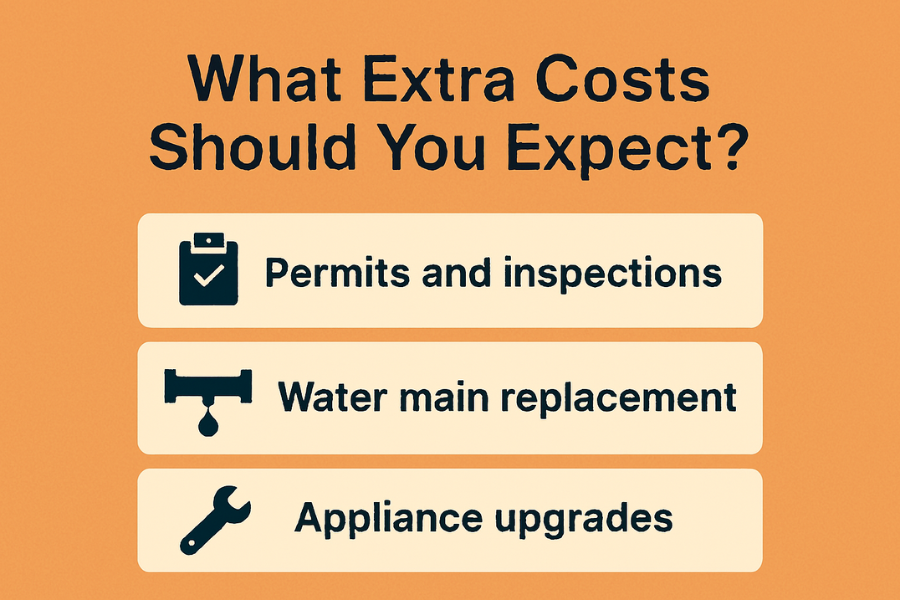
- Permits and inspections: $50 – $1,000
- Water main replacement: $600 – $2,500 plus excavation
- Appliance upgrades: Extra costs if you replace water heaters or fixtures
Local codes often require permits, and skipping them can lead to fines. Always confirm requirements before work begins.
When Should You Replace Plumbing in an Old House?
You should act if you notice:
- Frequent leaks or bursts
- Low water pressure
- Rust-colored or foul-smelling water
- Noisy or rattling pipes
- Visible corrosion
- Sudden spikes in water bills
- Fluctuating water temperatures
Any of these signs point to failing pipes. How many of them have you seen in your home?
How Long Do Pipes Last in Old Houses?
- Copper: 70–100 years
- Brass: 80–100 years
- Galvanized steel: 40–60 years
- Cast iron drains: 80–100 years
- PVC drains: Indefinite lifespan
- Lead pipes: Hazardous, replace immediately
- Polybutylene: Weak, prone to failure
Lead and polybutylene pipes require urgent replacement. Safety and reliability should guide your decision.
How Can You Save Money on Plumbing Replacement?
- Compare at least three licensed plumbers.
- Select materials that balance cost and durability.
- Replace the most critical sections first if funds are limited.
- Bundle projects to reduce labor costs.
- Schedule preventive inspections to avoid emergencies.
Smart planning reduces long-term expenses. Would you rather spend on prevention or face sudden repair bills?
What Steps Ensure an Accurate Estimate?
- Inspect your system for leaks, rust, and pressure issues.
- Hire a licensed plumber for a full evaluation.
- Request itemized quotes with labor, materials, and restoration listed.
- Confirm permit requirements with your municipality.
- Budget for drywall, flooring, or landscaping repairs.
A detailed estimate prevents hidden costs and surprises.
Why Does Replacing Plumbing Add Value to Your Home?
A modern plumbing system improves water quality, efficiency, and resale value. Buyers prefer homes with updated systems. You gain peace of mind and avoid costly emergencies. Would you consider plumbing replacement as an investment rather than an expense?
Final Thoughts
The cost to replace plumbing in an old house ranges from a few thousand dollars for partial work to over $15,000 for a full repipe. The right choice depends on your budget, the pipe material, and the age of your system. A proactive upgrade protects your home, saves money in the long run, and increases property value.
FAQs
How much does it cost to replace plumbing in an old house?
The cost ranges from $4,000 to $15,000+ for a full repipe. The national average is around $7,500. A partial replacement may cost $2,000 to $5,000, while replacing a single fixture can cost $450 to $1,800.
What factors affect the cost of plumbing replacement?
Key factors include the size of your home, the type of pipe material, the accessibility of pipes, and labor rates in your area. Additional costs may come from permits, inspections, and restoration work after walls or floors are opened.
How long does it take to replace plumbing in an old house?
A whole-house repipe usually takes 3 to 7 days, depending on the size of the home and the complexity of the system. Partial replacements may take only 1 to 2 days.
What type of pipes should I choose for replacement?
- PEX: Affordable and flexible, $0.40–$2.00 per foot.
- Copper: Durable and long-lasting, $2.00–$8.00 per foot.
- CPVC: Mid-range option, $0.50–$4.00 per foot. Your choice depends on budget, water quality, and long-term goals.
How do I know if my old house needs new plumbing?
Warning signs include frequent leaks, low water pressure, rust-colored water, noisy pipes, visible corrosion, and sudden spikes in water bills. Lead or polybutylene pipes should be replaced immediately due to safety risks.
Can I replace plumbing in stages to save money?
Yes. Many homeowners start with the most critical areas, such as bathrooms or kitchens, before moving to a full repipe. However, staged replacements may increase long-term labor costs.
Does replacing plumbing increase home value?
Yes. Updated plumbing improves water quality, efficiency, and buyer confidence. Homes with modern systems often sell faster and at higher prices.
Do I need a permit to replace plumbing?
Most municipalities require permits for major plumbing work. Permit fees range from $50 to $1,000 depending on location. Always confirm with your local building authority.
How long do different types of pipes last?
- Copper: 70–100 years
- Brass: 80–100 years
- Galvanized steel: 40–60 years
- Cast iron drains: 80–100 years
- PVC drains: Indefinite lifespan
- Lead and polybutylene: Replace immediately
Discover smart solutions and stylish trends for every corner of your home at HomeDwellish
About the Author