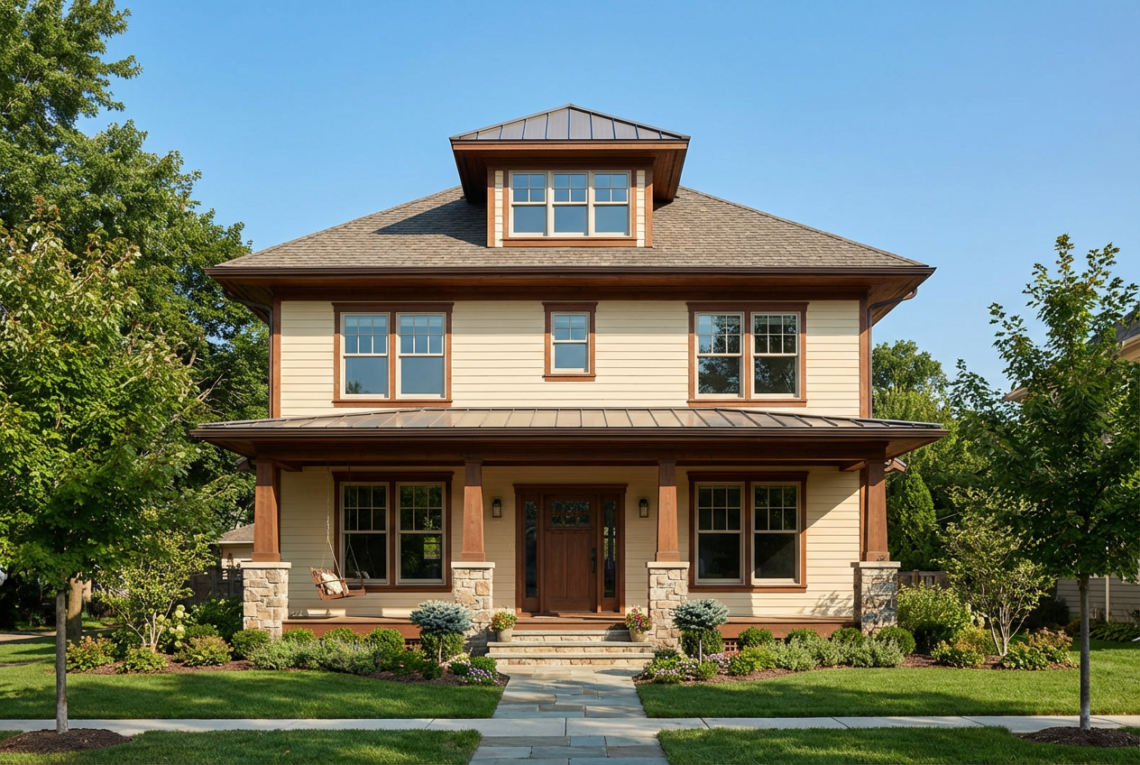
The American Foursquare marked a turning point in U.S. residential design. Architects introduced it between 1895 and 1935 as a direct answer to crowded cities and rising demand for affordable homes. Families valued its square footprint, wide porch, and efficient layout. Catalog giants such as Sears and Aladdin shipped complete kits nationwide, supported by the railroad network. Buyers received lumber, nails, and detailed plans at local depots, making construction accessible to the middle class. The style became a symbol of Progressive Era practicality, and you can still see its influence in thousands of neighborhoods today. Would you like me to refine this into a Google‑optimized meta description so it ranks strongly in search results?
Why Did the American Foursquare Become Popular?
The American Foursquare dominated U.S. housing between 1895 and 1935. Architects promoted it as a practical alternative to Victorian excess. Catalog companies like Sears, Aladdin, and Montgomery Ward sold thousands of kits nationwide. Railroads made delivery possible in every state.
Did you know Sears sold over 70,000 kit homes between 1908 and 1940? That number shows how widespread Foursquare became.
What Are the Key Features?
The design focused on efficiency. Builders used a square footprint to maximize space.
- Two to two‑and‑a‑half stories
- Low‑pitched hipped or pyramidal roof
- Central dormer on the front slope
- Full‑width porch with heavy columns
- Balanced window and door placement
Why did families prefer this style? The layout offered more usable space on small city lots.
How Was the Floor Plan Organized?
The name “Foursquare” came from its four‑room layout per floor.
- First Floor: foyer, living room, dining room, kitchen
- Second Floor: four bedrooms, often with a shared bath
- Attic: storage or extra living space
Early models kept kitchens detached to reduce fire risk. Later designs integrated kitchens and bathrooms. By 1914, indoor plumbing became standard in most catalog homes.
How Did Mail‑Order Kits Work?
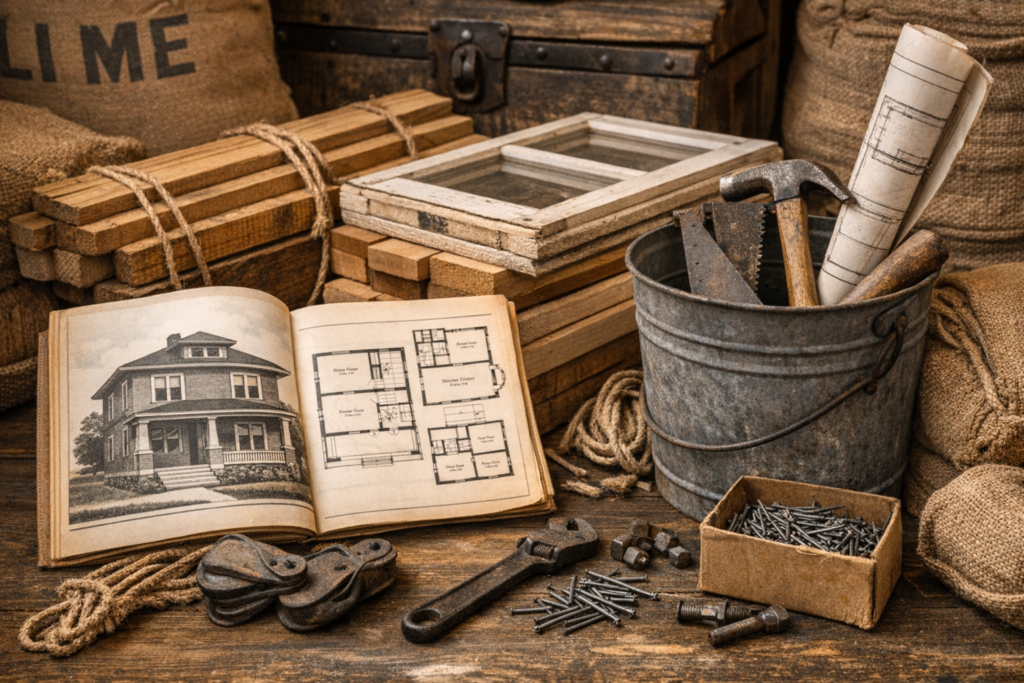
Catalogs transformed homeownership. Buyers selected a model, paid, and received a shipment of lumber, nails, windows, and instructions.
- Model 52: early design with detached kitchen
- Model 102 “Hamilton”: central hallway innovation
- Model 111 “Chelsea”: integrated bathroom and reception hall
- Model 157: modified exterior, “chambers” instead of bedrooms
- Honor Bilt Series: premium kits with stronger materials
- Model 2090 “Alhambra”: Mission‑style stucco variation
Prices ranged from $1,700 to $4,000 depending on size and finish. Adjusted for inflation, that equals $55,000 to $130,000 today. Would you invest in a kit home at that price?
How Did Styles Vary?
The Foursquare acted as a blank canvas. Homeowners added stylistic details:
- Craftsman rafters and natural wood
- Prairie horizontal lines and landscape integration
- Colonial Revival columns and trim
Adaptability made the style appealing across regions. Which variation would you choose for your own home?
How Big Was a Typical Foursquare?
Most homes measured 28–36 feet wide and 28–36 feet deep. Average size ranged from 1,600 to 2,500 square feet. Families enjoyed 8–10 rooms, including basements and attics. That scale matched the needs of middle‑class households in the early 20th century.
Why Does Foursquare Still Matter?
The design remains relevant today. Renovators appreciate its solid construction and flexible layout.
- Open concept conversions
- Expanded kitchens
- Restored porches
- Energy‑efficient upgrades
Historic preservation groups highlight the Foursquare as a symbol of Progressive Era values. According to the National Trust for Historic Preservation, Foursquares represent one of the most enduring American house types.
FAQs
What is an American Foursquare home?
The American Foursquare is a square house style built between 1895 and 1935. It has two stories, a central dormer, and a wide porch. Catalog companies such as Sears and Aladdin shipped thousands of kits nationwide.
Why did families choose the Foursquare?
Families wanted affordable homes with efficient layouts. The design offered four rooms per floor. According to Sears records, kit homes cost $1,700–$4,000, equal to $55,000–$130,000 today.
How does the Foursquare differ from Craftsman homes?
Craftsman homes highlight exposed rafters and natural wood. The Foursquare emphasizes a square footprint and balanced design. Many Foursquares included Craftsman details, creating hybrid styles.
What does “built four square” mean?
The phrase describes the layout of four rooms per floor. It also reflects the solid construction promoted during the Progressive Era.
How large is a typical Foursquare?
Most homes measure 28–36 feet wide and 28–36 feet deep. Average size ranges from 1,600 to 2,500 square feet. Families enjoyed 8–10 rooms, including basements and attics.
Were Foursquares sold as mail‑order kits?
Yes. Catalogs shipped complete packages of lumber, nails, windows, and instructions. Buyers assembled homes locally. Sears sold over 70,000 kit houses between 1908 and 1940.
Can you renovate a Foursquare today?
Yes. Owners often open walls for modern layouts, expand kitchens, and restore porches. Energy upgrades such as insulation and solar panels improve efficiency.
Final Insight
The American Foursquare combined affordability, practicality, and adaptability. Catalog sales, efficient layouts, and stylistic flexibility made it a cultural icon. You can still find thousands of examples across U.S. cities. The question is: will modern renovations keep the Foursquare alive for another century?
HomeDwellish positions itself as a lifestyle and home improvement platform that helps users shape their living spaces with style and comfort.